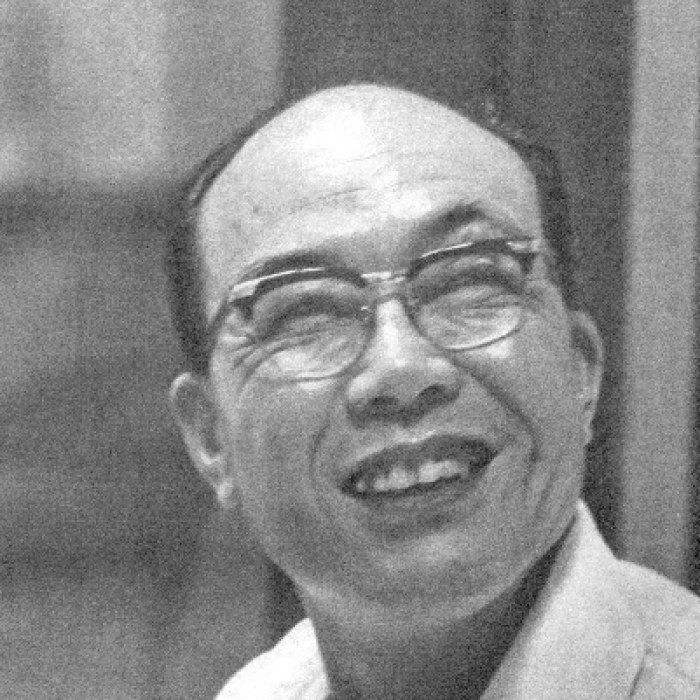
Soichiro Honda
A blacksmith’s son whose factory was bombed, flattened by an earthquake and sold, and who started again
Soichiro Honda was born in 1906 in a village near Hamamatsu, the son of a blacksmith who repaired bicycles. He was a poor scholar and, by his own account, forged the family seal to sign his bad reports. At fifteen he went to Tokyo as an apprentice at a garage called Art Shokai, where he swept floors for a year before being allowed near an engine, and at 22 was sent home to open a branch.
In 1937 he founded a company to make piston rings, having taught himself metallurgy, and went back to a technical college to learn what he lacked. His first samples for Toyota were rejected; most failed inspection. He kept at it until they passed. Then the war came. His factory was bombed in 1944, and in January 1945 an earthquake destroyed what was left. He sold the remains to Toyota and spent a year, as he put it, doing nothing.
In 1946 he bought 500 surplus army generator engines, fitted them to bicycles in a shack in Hamamatsu, and sold them to people who needed to move through a wrecked country. When the engines ran out he designed his own. Honda Motor Company was formed in 1948, and the next year he met Takeo Fujisawa, who handled money and sales so Honda could stay in the workshop. In 1954, with the company almost bankrupt, he announced he would race at the Isle of Man TT. Honda won its first TT in 1961.
He moved into cars in 1963 against government wishes, retired in 1973 while still healthy so younger engineers could take over, and died in 1991.