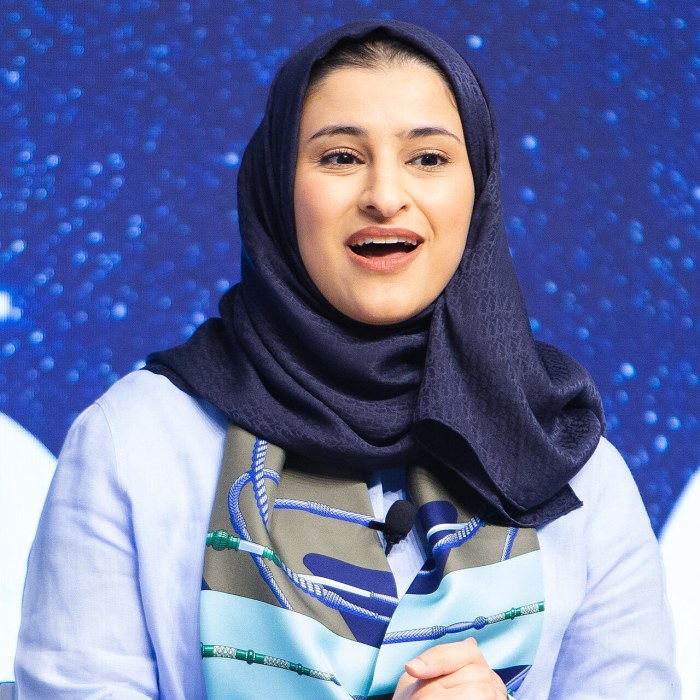
Sarah Al Amiri
Led the science behind the Arab world's first mission to another planet
Sarah Al Amiri studied computer engineering at the American University of Sharjah, intending a career in software rather than space. She joined the UAE's fledgling space programme early, working on the Earth-observation satellites DubaiSat-1 and DubaiSat-2 before the country announced a far larger ambition: an unmanned probe to Mars, to launch in time for the fiftieth anniversary of the UAE's founding in 2021.
As deputy project manager and science lead of the Emirates Mars Mission, known as Hope, Al Amiri helped direct a team built almost entirely from scratch, working with universities in the United States because the UAE had no existing deep-space expertise of its own. Critics doubted a young Gulf state with no space history could deliver an interplanetary mission on that timeline. Hope reached Mars orbit in February 2021, making the UAE the fifth entity in the world to reach the planet and the first Arab nation to do so.
Since then she has taken on wider government roles, serving as the UAE's Minister of State for Advanced Technology and later leading the country's push into artificial intelligence policy, while continuing to chair the UAE Space Agency. She is frequently cited as evidence that a national space programme can be built quickly by investing in young engineers rather than waiting to accumulate decades of institutional experience.