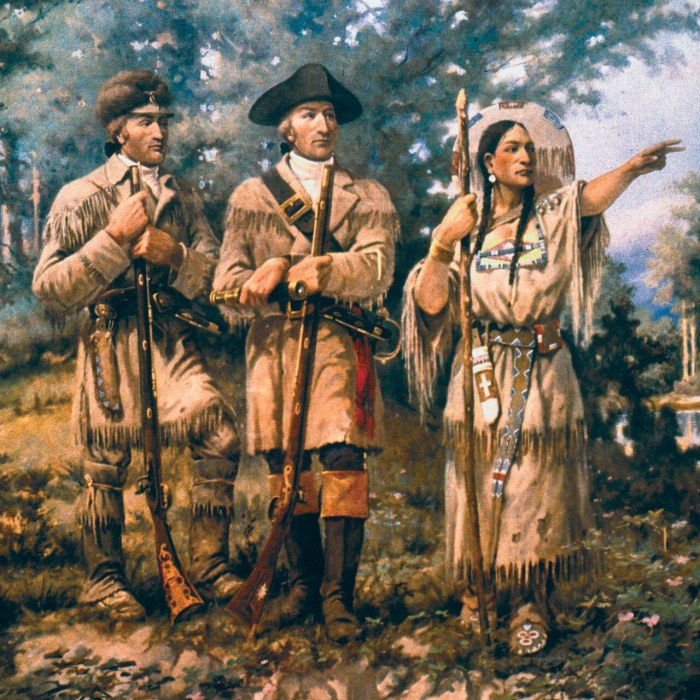
Sacagawea
A kidnapped Shoshone teenager whose knowledge and calm saved an American expedition
Sacagawea was born into the Lemhi Shoshone people in what is now Idaho. Around the age of twelve she was captured in a raid by Hidatsa warriors and taken hundreds of miles east to their villages on the Missouri River. There a French-Canadian trader named Toussaint Charbonneau took her, along with another captive girl, as a wife.
In 1804 the Lewis and Clark expedition wintered near the Hidatsa villages and hired Charbonneau as an interpreter, largely because his young wife spoke Shoshone and the expedition would need to buy horses from Shoshone bands to cross the Rocky Mountains. She was pregnant, and gave birth to her son Jean Baptiste in February 1805 with Lewis assisting. Two months later she was on the boats heading west with the baby on her back.
Her presence changed how other Native nations read the party; a woman and infant travelling with armed men signalled they were not a war party. When a boat nearly capsized in a squall, she calmly retrieved the papers, instruments and medicine that would otherwise have been lost. Later, meeting a Shoshone band to trade for horses, she recognised the chief as her own brother, Cameahwait, whom she had not seen since her capture.
She continued west to the Pacific and back, paid nothing directly for her work while her husband was paid. She died young, probably of illness, in 1812, though a competing oral tradition holds she lived on among the Shoshone into old age. Her son was later adopted and educated by William Clark.