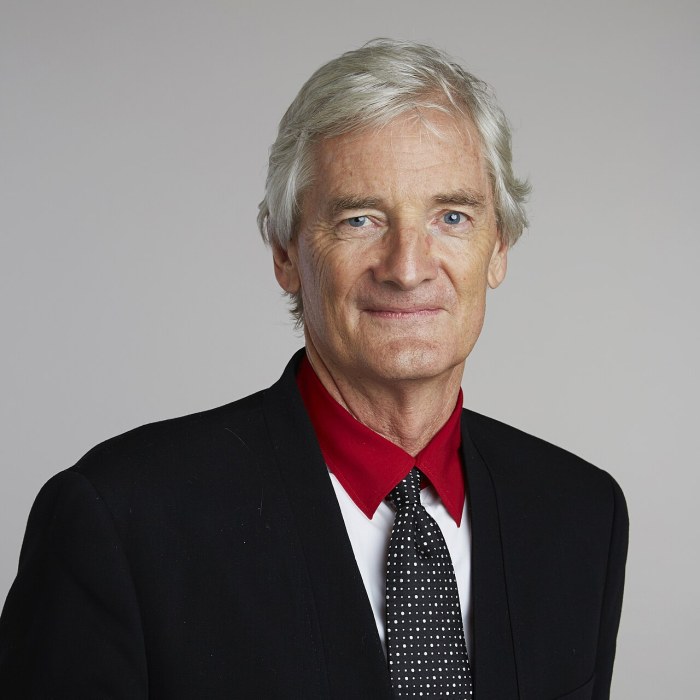
James Dyson
Built 5,127 prototypes of a vacuum cleaner before one worked
James Dyson grew up in Norfolk, where his father, a classics teacher, died of cancer when he was nine. He was a long-distance runner at school and went to art college in London intending to become a painter, before drifting into furniture and then industrial design at the Royal College of Art.
His first commercial success was the Ballbarrow, a wheelbarrow with a ball instead of a wheel so it would not sink into mud. He lost control of the company in a boardroom dispute, a lesson he never forgot about owning your own ideas.
In 1978, annoyed that his vacuum cleaner kept losing suction as the bag filled, he remembered the industrial cyclone at a sawmill that separated dust from air by spinning it. He built a cardboard version, taped it to his vacuum, and it worked. The next five years he spent in a coach house behind his home building prototype after prototype, 5,127 in all, while his wife's salary as an art teacher supported the family and the overdraft grew.
Every major manufacturer he approached turned him down; a bagless cleaner threatened their profitable bag sales. He licensed the design in Japan in the mid-1980s, used the royalties to fund his own factory, and launched the DC01 in Britain in 1993. Within two years it was the best-selling vacuum cleaner in the country. The company went on to make hand dryers, fans, hair dryers and robot vacuums, and now employs thousands of engineers. He was knighted in 2007 and has put much of his money into engineering education, including a university on the company's campus in Wiltshire that pays its students to study.