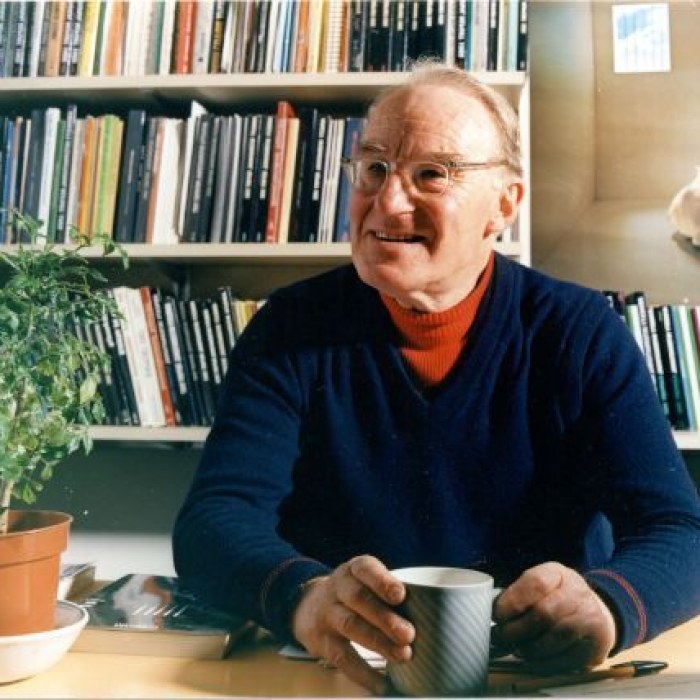
Peter Benenson
Read about two students jailed for a toast to freedom and founded Amnesty International
Peter Benenson was born in London in 1921, the son of a British army officer and a Russian-born mother; his father died when he was nine. At Eton he raised money for children caught up in the Spanish Civil War and, with school friends, helped bring two young German Jews to Britain. He worked at Bletchley Park during the war, then qualified as a barrister and spent the 1950s observing political trials abroad for lawyers' groups, in Spain, Hungary and Cyprus, and helped found the organisation that became Justice.
The story he told of Amnesty's origin was that in 1960, reading a newspaper on the London Underground, he came across a report of two Portuguese students jailed for raising a glass to freedom, and was so angry that he got off at Trafalgar Square and went into St Martin-in-the-Fields to think. On 28 May 1961 The Observer published his article "The Forgotten Prisoners", which introduced the phrase "prisoner of conscience" and asked readers to write to governments on behalf of six named people. It was reprinted around the world and the response overwhelmed his chambers.
Amnesty International grew out of that appeal. Its emblem, a candle wrapped in barbed wire, came from the proverb he liked to quote about lighting a candle rather than cursing the darkness. In 1966 and 1967 he fell out with colleagues in a bitter dispute over the organisation's independence from the British government and stepped away for years, but was later reconciled with it. He refused honours, and died in 2005.