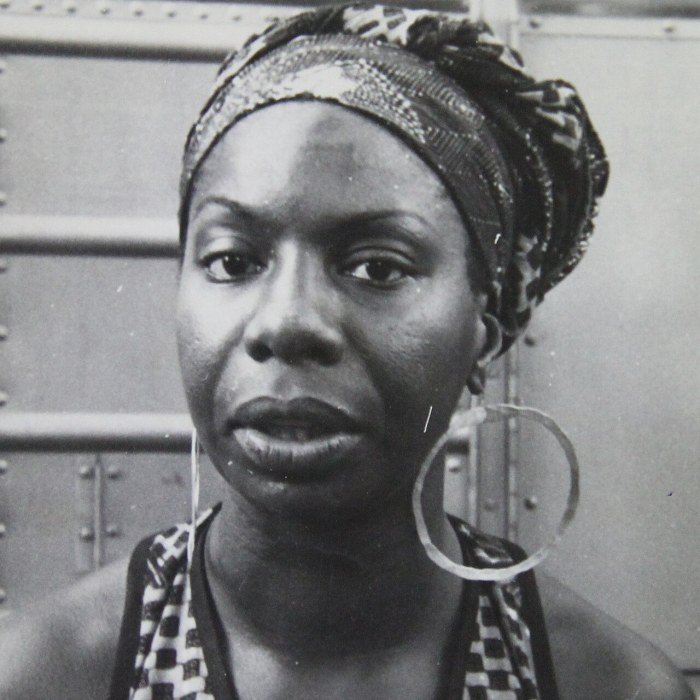
Nina Simone
Refused by a classical conservatory, she played bars to survive and became the voice of a movement
Eunice Waymon was born in Tryon, North Carolina, the sixth of eight children of a preacher and a handyman. She was playing the piano by ear at three. At a recital when she was about eleven her parents were moved from the front row to make way for white listeners; she refused to play until they were brought back. A local music teacher and the town's white families raised money to send her to Juilliard for a summer.
Her goal was to become the first Black woman classical concert pianist in America. In 1951 she auditioned for the Curtis Institute in Philadelphia and was rejected. She believed for the rest of her life that it was because of her race, and the wound never healed.
To pay for lessons she took a job playing piano in an Atlantic City bar in 1954, singing because the owner demanded it and using the name Nina Simone so her mother would not find out. Within a few years she had a hit with I Loves You, Porgy and a recording career that spanned jazz, blues, folk and classical music.
The murder of Medgar Evers and the Birmingham church bombing in 1963 turned her into an activist. Mississippi Goddam was written in an hour and banned in several states. She left America in the 1970s, struggled for years with money, illness and rage, and died in France in 2003. Curtis had awarded her an honorary diploma two days earlier.