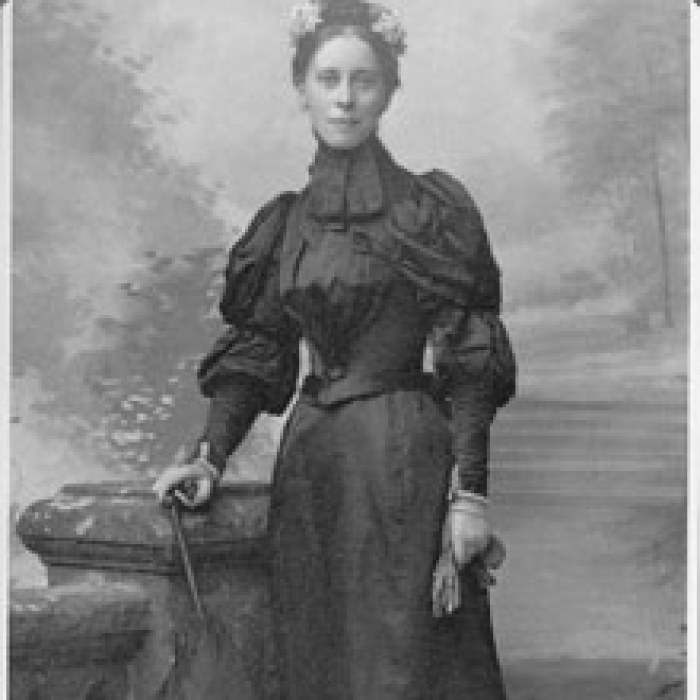
Mary Kingsley
Nursed her parents until thirty, then went to West Africa alone to collect fish and argue with missionaries
Mary Kingsley had no formal education. Her father, a doctor and traveller, was away for years at a time; her mother was an invalid; and Mary spent her twenties running the house, nursing them both and reading her way through her father's scientific library. Both parents died within weeks of each other in 1892. At thirty she had a small inheritance and, for the first time, no one to look after.
She chose West Africa, which Europeans then called the white man's grave. Nobody there could tell her how to behave, she said. She went in 1893 and again in 1894, travelling as a trader, in a long black skirt and high-collared blouse, exchanging cloth and tobacco for rubber and ivory to pay her way. She collected fish specimens for the British Museum, several of which were new to science and were named after her. She paddled a canoe up the Ogooué river in Gabon, spent time among the Fang people, whose reputation for cannibalism did not deter her, and fell into a game pit lined with stakes and was saved by her thick skirt. She climbed Mount Cameroon, 4,000 metres, by a route no European had used.
Her Travels in West Africa, published in 1897, was funny and irreverent and sold widely. She argued against missionaries and colonial officials that African societies had their own coherent laws and beliefs, though she also opposed votes for women and believed in trade rather than empire.
In 1900 she went to South Africa to nurse Boer prisoners of war in Simon's Town, caught typhoid and died at 37. She was buried at sea, as she had asked.