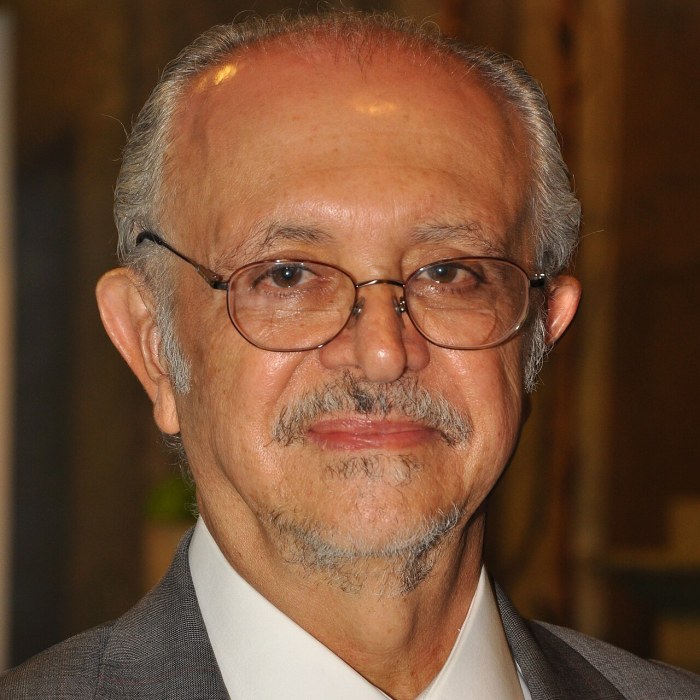
Mario Molina
Warned that spray cans were destroying the ozone layer, and was told he was being hysterical
Mario Molina was born in Mexico City in 1943, the son of a lawyer and diplomat. As a boy he was given a chemistry set and a microscope, and converted a bathroom at home into a laboratory; an aunt who was a chemist helped him with experiments beyond the usual level. He studied chemical engineering in Mexico, then in Germany, and completed a doctorate at Berkeley in 1972.
In 1973 he joined the laboratory of Sherwood Rowland at Irvine, and chose from a list of projects the one that seemed least glamorous: what happened to chlorofluorocarbons, the inert gases used in refrigerators and aerosol sprays, once they escaped into the atmosphere. The answer he worked out was that nothing happened to them for decades, until they rose high enough for ultraviolet light to break them apart. The chlorine released would then destroy ozone, molecule after molecule, in a chain reaction.
Their paper appeared in Nature in 1974. The chemical industry called the idea speculative and the two men alarmist, and a long argument followed. In 1985 the discovery of a hole in the ozone layer over Antarctica settled it, and in 1987 governments agreed the Montreal Protocol to phase the gases out. It is often called the most successful environmental treaty ever made.
Molina shared the Nobel Prize in Chemistry in 1995, the first Mexican-born scientist to do so. He spent his later years on air pollution in Mexico City and on climate change, and died in 2020.