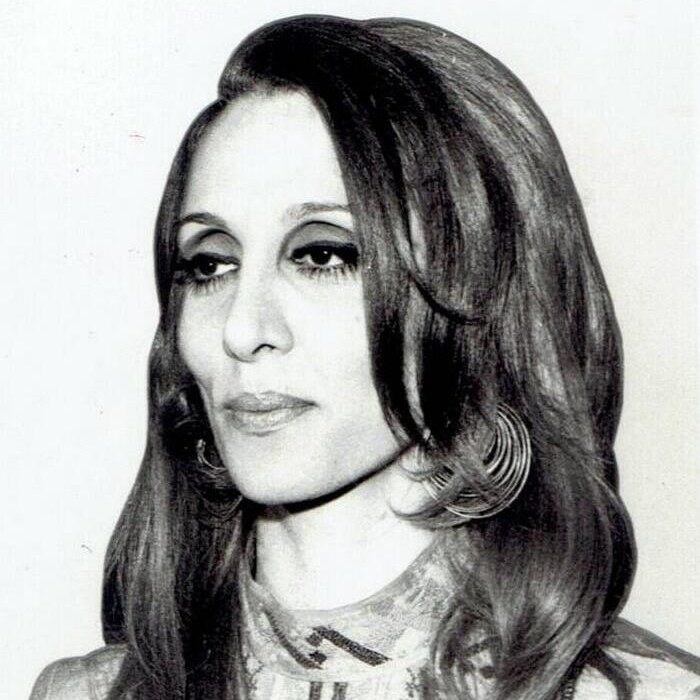
Fairuz
The printer's daughter who became the voice of Lebanon and refused to sing for either side in its civil war
Nouhad Haddad was born in 1934 and grew up in a single room in a poor district of Beirut, where her father worked as a typesetter at a printing press. The family had no radio; she listened to the neighbours\' through the wall. A teacher heard her singing at school and took her to the Lebanese state radio station, where she was hired for the chorus and given the name Fairuz, meaning turquoise.
At the station she met the brothers Assi and Mansour Rahbani, who were writing songs in a new style, short and modern but rooted in the folk music of the mountain villages. She married Assi in 1955. Together the three of them produced hundreds of songs and a series of musical plays that were performed at the Baalbek festival among the Roman ruins, and her voice, clear and formal and never showy, became the sound of Lebanon and then of the whole Arab world.
When civil war broke out in 1975 she did what few public figures managed: she stayed in Beirut and refused to sing anywhere in Lebanon for the whole fifteen years, so that no militia could claim her. Assi suffered a stroke in 1972 and died in 1986. She went on working with their son Ziad, a composer of a very different, jazzier kind. In 1994 she gave a concert in the ruined city centre to mark the peace.
Now in her nineties, she almost never speaks in public and has not needed to.