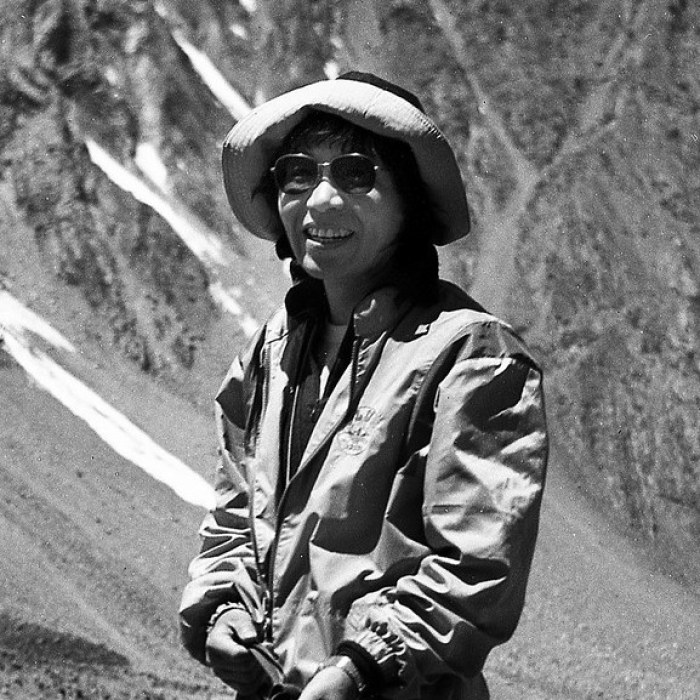
Junko Tabei
Dug out of an avalanche at 6,300 metres, she carried on and became the first woman to climb Everest
Junko Tabei was the fifth of seven children in a small town in Fukushima, a frail girl who was often ill. A school trip to a volcano at ten gave her a love of mountains, but her family had little money and there were years when she could not climb at all. She studied English literature at university in Tokyo, worked as an editor of a scientific journal, and climbed at weekends.
Men she climbed with often assumed she was there to find a husband. In 1969 she founded the Ladies Climbing Club of Japan, and in 1975 led a team of fifteen women to Everest. Sponsors were scarce; the women made their own waterproof gloves from car seat covers and sleeping bags from recycled materials. At Camp Two an avalanche buried the tents in the night. Tabei was knocked unconscious and pulled out by Sherpas, bruised so badly she could barely walk for two days.
Twelve days later, on 16 May 1975, she reached the summit with Ang Tsering, the first woman to stand on top of the world. She said afterwards that she had never wanted to be first; she simply wanted to climb.
She went on to become the first woman to climb the highest peak on every continent, completed in 1992, and organised clean-up expeditions to remove the rubbish that climbers left on Everest. Diagnosed with cancer in 2012, she kept leading young people up Mount Fuji until shortly before her death.