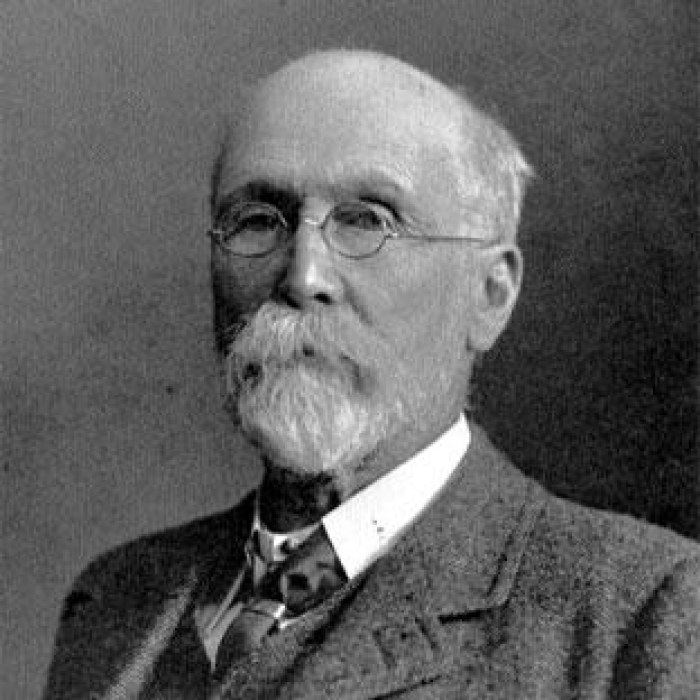
Joseph Rowntree
A York grocer who made chocolate, then asked why people were poor in the first place
Joseph Rowntree was born in 1836 above his father's grocery shop in Pavement, York, a Quaker household where reading and argument were encouraged. At fourteen his father took him to Ireland during the famine, and the sight of people starving in the streets stayed with him for the rest of his life. He worked in the shop for twenty years, learning the trade from the bottom.
In 1869 he joined his younger brother Henry Isaac, whose cocoa business in the city was close to failing. Joseph put in his savings and took charge of the books. For more than a decade it was a struggle; the works were cramped, the machinery old, and the firm was undercut by bigger rivals. Success came slowly, first with fruit pastilles in 1881 and then with a cocoa powder that could compete with Cadbury's. By the 1890s the company employed thousands and had moved to a new factory on the edge of York.
He used it to try things. Rowntree's set up one of the first company pension schemes in 1906, appointed a works doctor and welfare officers, and gave workers a say through councils. At New Earswick he built a village of cottages with gardens, to show that good housing need not be a charity.
His son Seebohm's 1901 survey found that nearly a third of York's population lived in poverty, mostly because wages were too low, not because of drink or fecklessness. In 1904 Joseph placed about half his wealth into three trusts, telling them to look for root causes. He died in 1925, and the Joseph Rowntree Foundation still does the work he set it.