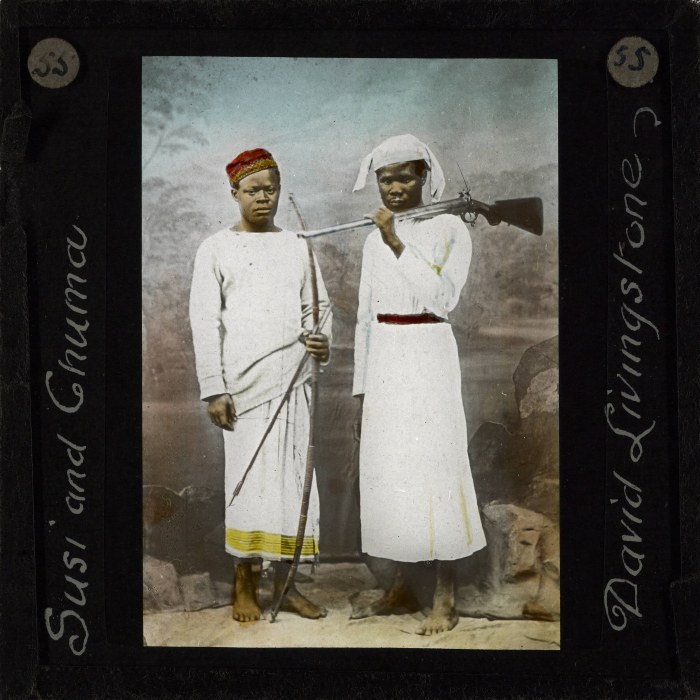
James Chuma
Freed from slavery by Livingstone, he carried his employer's body a thousand miles to the coast
James Chuma was a Yao boy from the region around Lake Nyasa when, in 1861, he was rescued from a slave-trading gang by David Livingstone's Zambezi expedition. Rather than being simply released, he stayed on with the expedition and grew up within it, eventually becoming one of Livingstone's most trusted attendants alongside another freed captive, Abdullah Susi.
Over the following decade Chuma travelled with Livingstone on his last, gruelling journeys into central Africa in search of the source of the Nile, work that involved months of illness, hunger and the slow attrition of porters who died, deserted or turned back. Livingstone trusted Chuma's judgement enough to rely on him for negotiation with local chiefs and for keeping the expedition's diminishing supplies organised.
When Livingstone died at Chitambo's village in present-day Zambia in May 1873, it was Chuma and Susi who took charge. They removed and buried his heart and organs, dried his body in the sun and salt to preserve it, wrapped it in bark and sailcloth, and organised the nine-month, roughly thousand-mile journey to carry it to the coast at Bagamoyo, protecting it from suspicious villages that feared carrying a corpse would bring disaster.
Chuma travelled to Britain in 1874, met Livingstone's family, and helped the missionary Horace Waller edit Livingstone's last journals, providing memories no written record contained. He died in 1882, still a young man, his own achievements long overshadowed by the man he had served.