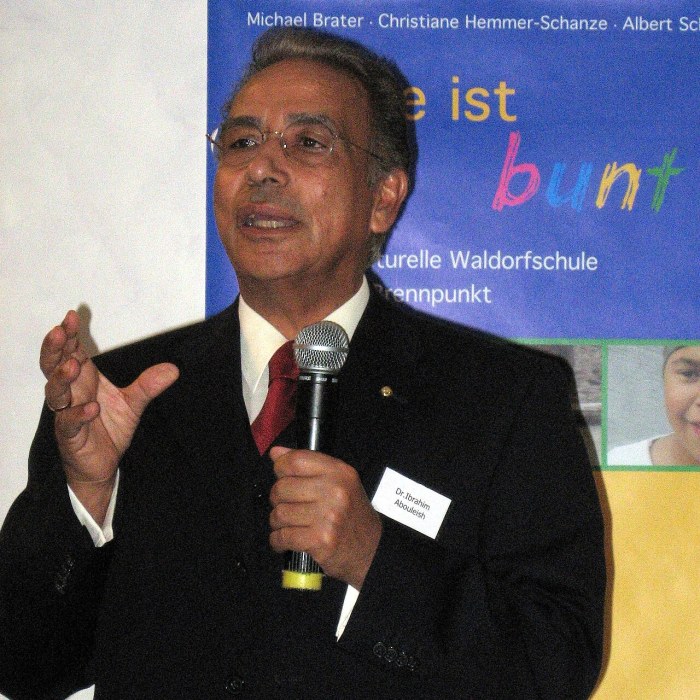
Ibrahim Abouleish
Left a research career in Austria to grow medicine in the Egyptian desert
Ibrahim Abouleish was born in Alexandria, Egypt, in 1937 and left in his early twenties to study chemistry and medicine in Austria, where he built a career in pharmaceutical research and took Austrian citizenship. By the early 1970s he had a comfortable, settled professional life in Graz.
In 1975 he returned to Egypt to buy seventy hectares of barren desert land northeast of Cairo, with the idea of restoring it through organic farming and building a self-sustaining community around the work. The land had no infrastructure and needed years of composting and irrigation before it could grow anything reliably. He named the project Sekem, after an ancient Egyptian word associated with the vitality of the sun, and structured it not as a conventional company but around cooperative ownership, profit-sharing with workers, and reinvestment in shared services.
Over four decades Sekem grew into a substantial organic food and pharmaceutical business, exporting herbs, cotton and medicines, while also funding a school, a training college, a medical centre and an academy for applied arts and sciences on the same site, all built from the farm's earnings rather than outside charity. Egyptian cotton farmers working with Sekem were trained in organic methods that reduced pesticide use across the wider industry.
Abouleish received the Right Livelihood Award, sometimes called the "alternative Nobel", in 2003 for the model. He died in 2017; his son Helmy continued running the business, which remains one of the most cited examples of a large-scale social enterprise in the Middle East.