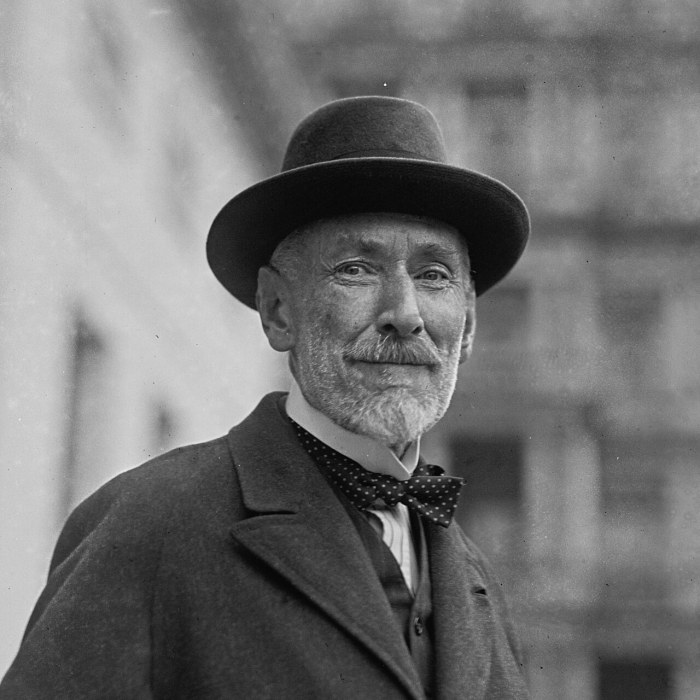
Horace Plunkett
An Anglo-Irish landowner who spent a fortune persuading small farmers to work together
Horace Plunkett was born in 1854 into an aristocratic Anglo-Irish family, but as a young man was diagnosed with tuberculosis and advised to seek a warmer, more active climate. He spent a decade ranching in Wyoming in the United States, an experience that toughened his health and exposed him to cooperative grain elevators and marketing schemes that American farmers used to get fairer prices from powerful buyers.
Returning to Ireland in the 1880s, he found small farmers there selling milk and butter individually to middlemen who set prices to their own advantage, leaving farming families with little bargaining power and no way to invest in better equipment. Convinced that farmers acting together could process and sell their goods far more profitably than acting alone, he began touring the Irish countryside in the late 1880s trying to persuade sceptical, often mutually distrustful farmers to pool their milk into shared creameries.
Progress was slow and often bitter, since existing dealers and some larger landowners saw cooperation as a threat, and Plunkett was frequently accused of meddling in matters he did not understand as a landowner rather than a working farmer. He persisted, founding the Irish Agricultural Organisation Society in 1894 to coordinate the movement, and by the early twentieth century hundreds of cooperative creameries and credit societies were operating across Ireland, measurably raising rural incomes.
He later served in government promoting agricultural policy, but his political career was cut short by opposition to his unionist sympathies, and he spent his final years continuing to champion agricultural cooperation, an idea he had imported almost single-handedly and then spent decades wearing down resistance to establish.