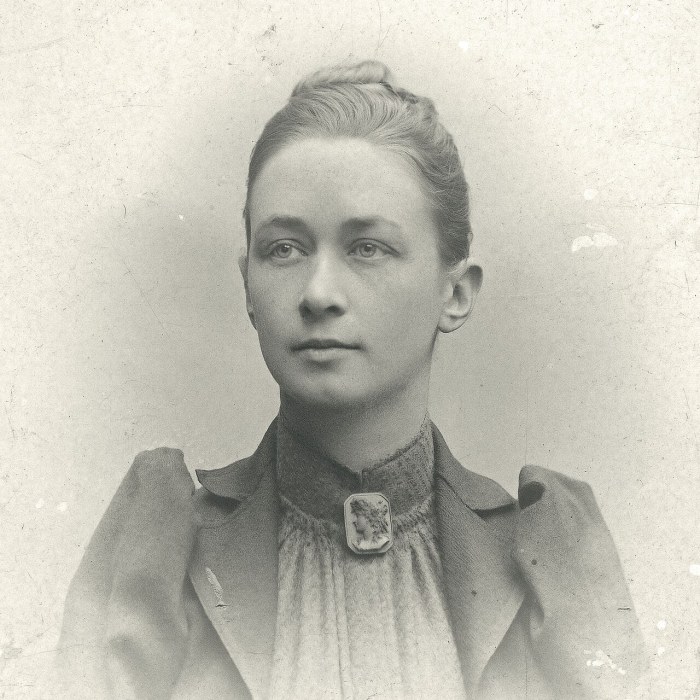
Hilma af Klint
Painted abstract pictures before Kandinsky and ordered them hidden for twenty years after her death
Hilma af Klint was born near Stockholm into a family of naval officers and studied at the Royal Academy of Fine Arts, one of the few art schools in Europe then open to women. She graduated in 1887 and made a respectable living painting portraits, landscapes and botanical illustrations. In private she attended séances, joined the Theosophical Society and, with four other women, formed a group called The Five that met weekly to meditate and record messages they believed came from spiritual guides.
In 1906, aged 44, she began the work she considered her real task: a series she called The Paintings for the Temple. Over the next nine years she made 193 of them, some more than three metres high, filled with spirals, circles, diagrams and colours that referred to nothing in the visible world. Kandinsky, usually credited with the first abstract painting, did not make his until 1911. She showed the works to almost nobody. Rudolf Steiner, whom she admired, visited in 1908 and was not encouraging; she stopped painting for four years.
She continued working in notebooks and smaller pictures until her death in 1944, after a tram accident, at 81. Her will stipulated that the paintings should not be shown until at least twenty years after her death, as she believed the world was not ready. Her nephew kept them in crates. They were first exhibited in Los Angeles in 1986. In 2018 the Guggenheim in New York gave them a show that drew more visitors than any in the museum\'s history.