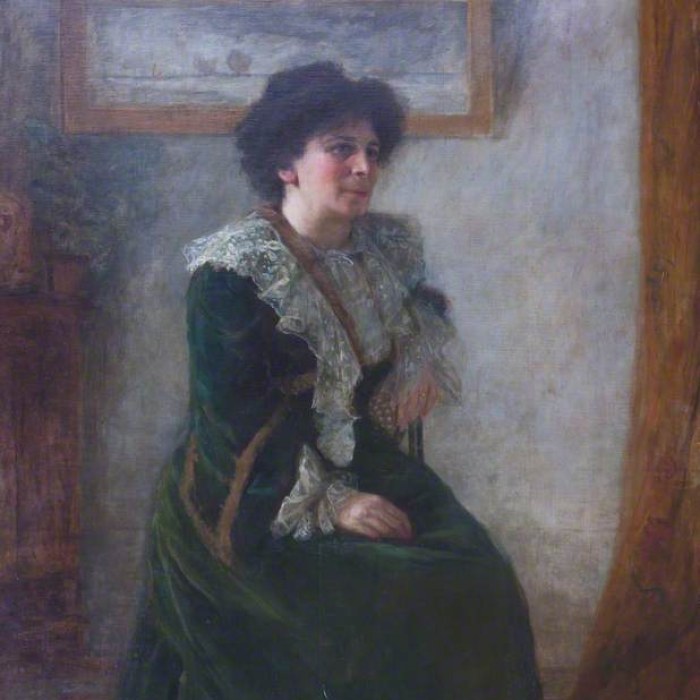
Hertha Ayrton
A watchmaker's daughter who mastered the electric arc and was refused by the Royal Society for being married
Phoebe Sarah Marks was born in Portsea, one of eight children of a Polish Jewish watchmaker who died when she was seven, leaving her mother to support the family by sewing. An aunt in London took her in and educated her. She took the name Hertha as a teenager and, with money raised by friends including the novelist George Eliot, went to Girton College, Cambridge, to study mathematics. Cambridge did not grant degrees to women, so she took hers from the University of London.
She invented a line-divider for draftsmen, then studied electrical engineering at Finsbury Technical College under William Ayrton, whom she married in 1885. Taking over his experiments on electric arc lamps, then the main form of street lighting, she worked out why the arc hissed and flickered and published a series of papers and a definitive book. In 1899 she became the first woman to read her own paper to the Institution of Electrical Engineers and its first woman member.
The Royal Society accepted her paper on the ripples formed in sand by water but ruled in 1902 that a married woman could not be a Fellow. It gave her its Hughes Medal in 1906 instead. During the First World War she designed a hand-operated fan for pushing poison gas out of trenches, and more than 100,000 were made after she fought the War Office to adopt it.
She was an active suffragette and nursed Emmeline Pankhurst after hunger strikes.