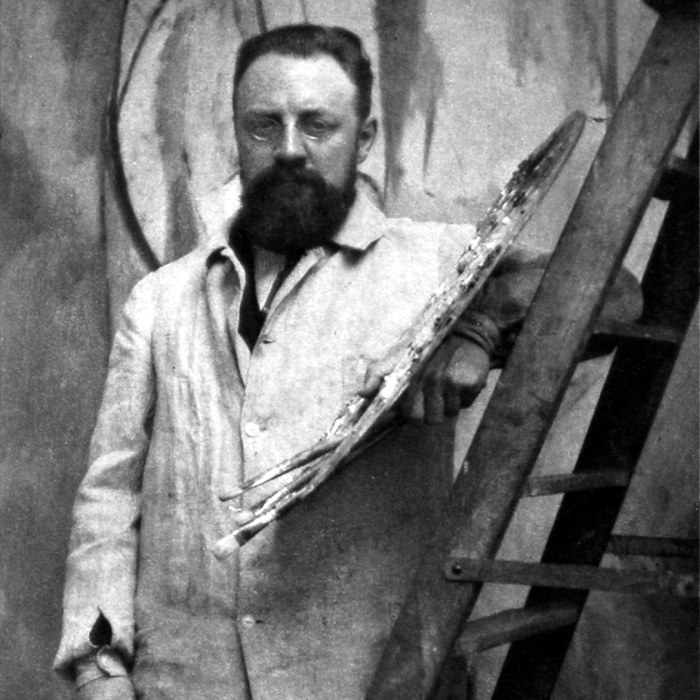
Henri Matisse
Left bedridden by cancer surgery at 71, he picked up scissors and began what he called his second life
Henri Matisse was the son of a grain merchant in northern France and was working as a law clerk when, at twenty, he was laid up for months after an operation for appendicitis. His mother brought him a box of paints to pass the time. He later said that from the moment he opened it he felt he had found a kind of paradise, and he went to Paris to study art against his father's wishes.
Success was slow. He was over thirty and supporting a family before his work began to sell, and when he showed his fiercely coloured paintings in 1905 a critic dismissed him and his friends as fauves, wild beasts. His father regarded him as a failure. Over the following decades his reputation grew steadily until he was, with Picasso, one of the two most important painters alive.
In January 1941, aged 71, he had surgery for cancer of the intestine that nearly killed him. He was left unable to stand for long and worked from his bed and a wheelchair for the rest of his life. He called the years that followed his second life. Unable to paint as he had, he cut shapes from paper his assistants had painted in gouache and pinned them to the walls of his rooms, composing pictures and eventually whole environments in cut paper.
The Jazz book, the Blue Nudes and the chapel at Vence all came from this period. He died in 1954, aged 84.