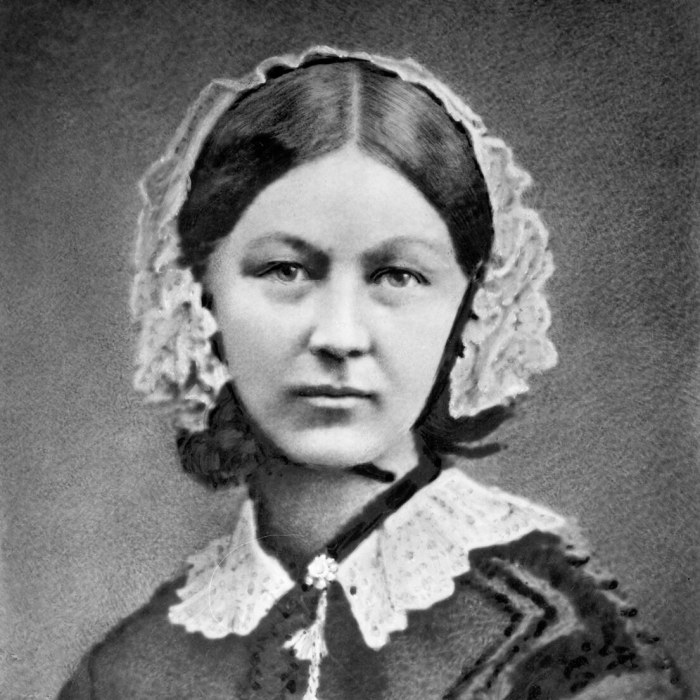
Florence Nightingale
Founder of modern nursing and a pioneer of using data to save lives
Florence Nightingale was born into a rich, well-connected English family that expected her to marry well and do nothing in particular. Nursing in the 1840s was regarded as a job for drunks and the desperate. When she announced she felt called to it, her family was horrified, and it took her years of quiet defiance to get any training.
In 1854 reports reached Britain of soldiers dying in appalling conditions in the Crimean War. Nightingale led 38 nurses to the military hospital at Scutari, near Istanbul. She found men lying in sewage, with rats, no clean linen and almost no food. She organised laundries, kitchens and supplies, and walked the wards at night with a lamp, which is how the press came to know her.
The part of her story that is less told matters more. Back in Britain she analysed the mortality figures and showed that far more soldiers had died of preventable disease than of wounds. She invented a new kind of chart, the "coxcomb" or polar area diagram, to make the numbers impossible for politicians to ignore. She was elected the first woman member of the Royal Statistical Society.
For the rest of her long life, mostly from her bed with a chronic illness picked up in the Crimea, she wrote reports, advised governments and founded the first professional nursing school at St Thomas' Hospital in London. Modern nursing, hospital design and public health statistics all trace lines back to her desk.