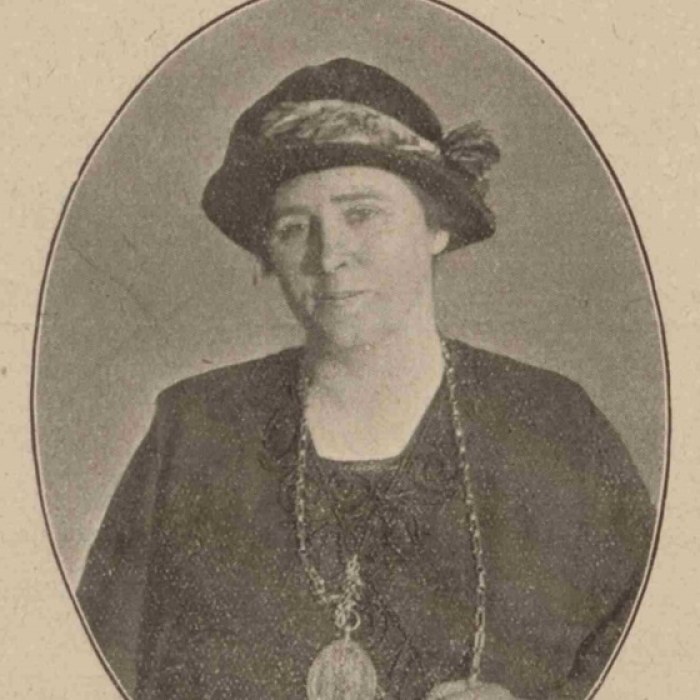
Mary Barbour
Mobilised the housewives of Govan against wartime rent rises and forced a change in the law within weeks
Mary Rough was born in Kilbarchan, Renfrewshire, the daughter of a carpet weaver, and worked in the mills herself from her early teens. She married an engineer, David Barbour, and moved to Govan, on the Clyde, where she joined the Co-operative Women's Guild and the Independent Labour Party. That was the extent of her public life until the First World War.
In 1914 and 1915 workers poured into Glasgow to build ships and munitions, and landlords, seeing full tenements and no new building, raised rents by as much as a quarter. Families whose men were at the front could not pay and were evicted. Barbour set up a branch of the Glasgow Women's Housing Association in Govan and organised the women of the closes into what the press called Mrs Barbour's Army. When the sheriff officers came to carry out an eviction, someone rang a bell or blew a whistle, and the stairwell filled with women who blocked the doors and pelted the officers with flour and wet clouts. Rent strikes spread across the city to some 20,000 households.
In November 1915 eighteen tenants were summoned to court for arrears. Thousands of women, joined by shipyard workers who downed tools, marched on the sheriff court. The case was dropped, and within a month Parliament had passed an Act pegging rents at their pre-war level for the duration of the war. It was the first rent control in Britain, and it was never fully repealed.
She helped lead the Women's Peace Crusade, became one of Glasgow's first women councillors in 1920 and its first woman bailie, and campaigned for public baths, washhouses and family planning clinics. She died in 1958.