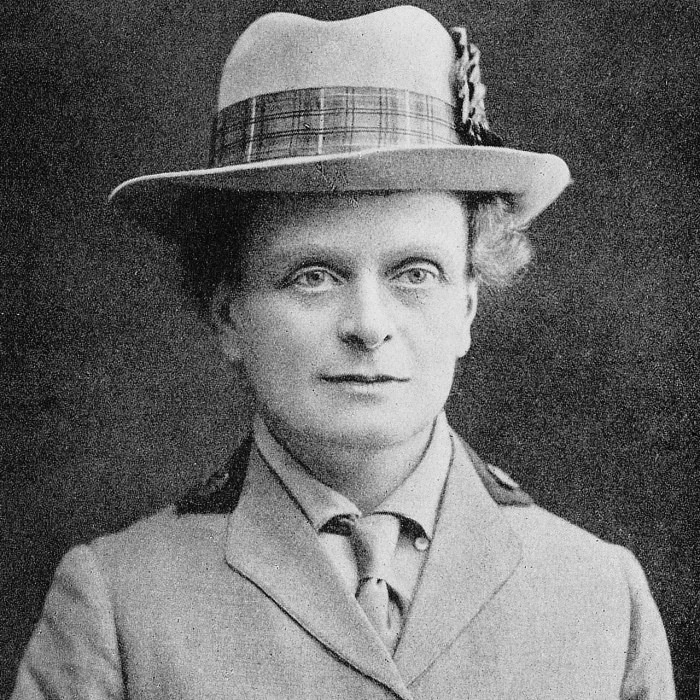
Elsie Inglis
Told to go home and sit still in 1914, she took women's hospitals to France, Serbia and Russia
Elsie Inglis was born in 1864 in India, where her father was a civil servant, and unusually for the time he encouraged her to study. She qualified in medicine in Edinburgh in the 1890s, when women doctors were still a curiosity, and set up a small maternity hospital for poor women in the city, often waiving fees. She was active in the suffrage movement, but her manner was more matron than firebrand.
When war began in 1914 she proposed to the War Office that she raise complete medical units staffed by women, surgeons included. The official who saw her is recorded as replying, My good lady, go home and sit still. She did not. With money from suffrage societies she founded the Scottish Women's Hospitals for Foreign Service and offered them to Britain's allies, who were less fussy. The first opened in the abbey of Royaumont near Paris in December 1914.
She went herself to Serbia in 1915, where typhus was killing more men than the fighting. When the Serbian army was driven out that autumn she chose to stay with her patients and was taken prisoner, then repatriated. In 1916 she took a unit to Russia and Romania to serve with Serbian troops on the eastern front, in conditions of retreat and chaos, while herself growing ill with cancer.
She brought her unit home in November 1917 and died in Newcastle the day after landing. Serbia gave her its highest honour; Edinburgh gave her a funeral in St Giles.