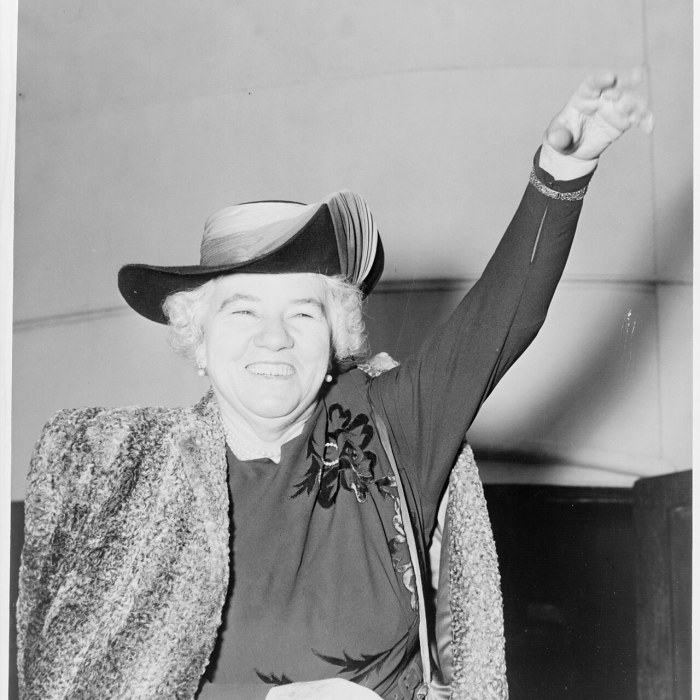
Elizabeth Kenny
A self-taught bush nurse who defied the doctors on polio and was proved right
Elizabeth Kenny grew up on farms in New South Wales and Queensland with little schooling. She never trained as a nurse but worked as one in the bush, riding out to remote homesteads, and in 1911 met her first case of infantile paralysis. With no doctor for miles she did what seemed sensible: applied hot, damp cloths to the child's contracted muscles and gently moved the limbs. The child recovered.
Orthodox treatment at the time was the opposite. Affected limbs were immobilised in splints and plaster for months, which often left the muscles permanently wasted. Kenny argued that polio was a disease of muscles in spasm, not of nerves alone, and that early movement was essential. She served on troopships in the First World War, acquired the title "Sister" and kept it, and in the 1930s opened clinics in Queensland.
Doctors were hostile. She was untrained, female, blunt and certain, and she overstated her case. A Queensland royal commission in 1938 rejected her theories, while conceding that her patients did unusually well. In 1940 she took her methods to the United States and found doctors in Minneapolis willing to try them. The results were hard to argue with, and by 1942 the Sister Kenny Institute had opened there and her approach was spreading through American hospitals.
In 1951 a Gallup poll ranked her among the most admired women in America. She returned home ill with Parkinson's disease and died in Toowoomba in 1952.