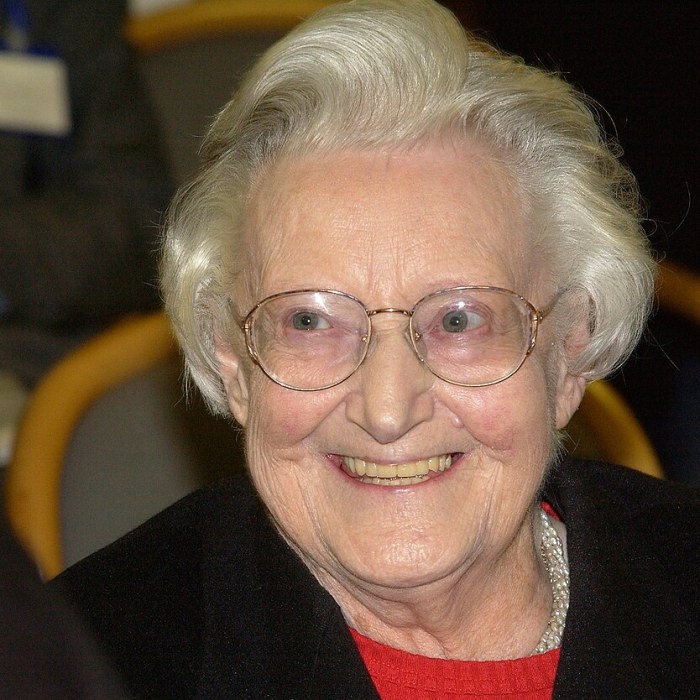
Cicely Saunders
Nurse, social worker, then doctor at 38, she invented the modern hospice
Cicely Saunders left Oxford in 1940 to train as a nurse at St Thomas' Hospital, but a bad back forced her off the wards. She retrained as a medical social worker, and in 1948 met David Tasma, a Polish Jewish refugee dying of cancer on a busy ward. Their conversations about what a better place to die might look like ended with him leaving her five hundred pounds, saying he would be "a window in your home".
A surgeon told her bluntly that nobody would listen to a nurse about pain; she should read medicine. She did, qualifying in 1957 at the age of thirty-eight. Working at St Joseph's Hospice in Hackney she kept detailed records of over a thousand dying patients and showed that giving oral morphine regularly, before pain returned, controlled it without turning people into addicts or zombies. She coined the idea of "total pain": physical, emotional, social and spiritual distress bound together.
Raising the money for her own hospice took years of letters, lectures and rejections. St Christopher's opened in Sydenham in 1967 with research and teaching built in from the start, so that what was learned there could spread. It did, into hospices and palliative care teams around the world.
She married the Polish painter Marian Bohusz-Szyszko in 1980, when she was 61, and nursed him at St Christopher's when he died. She was made a Dame in 1980 and given the Order of Merit in 1989. She died in 2005, in the hospice she had built.