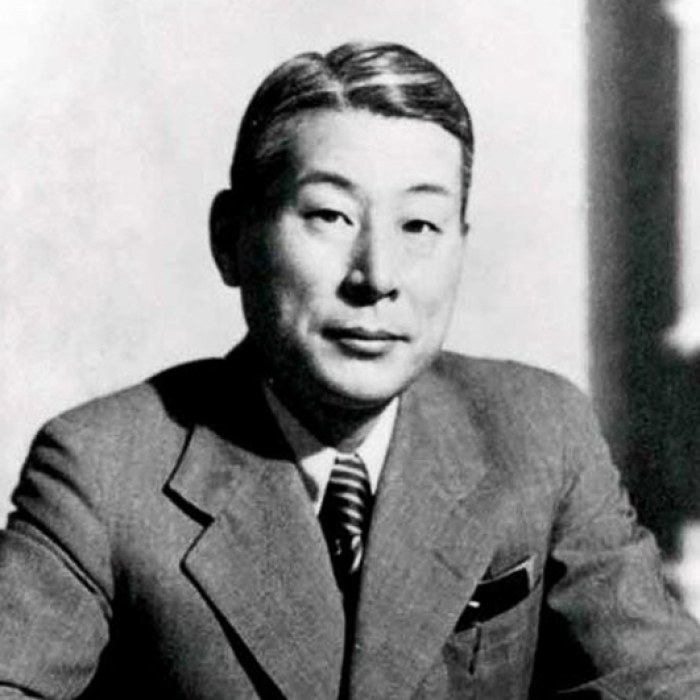
Chiune Sugihara
A Japanese diplomat who wrote visas by hand for weeks against orders, saving thousands of Jews
Chiune Sugihara was a diplomat who had specialised in Russian affairs, served in Manchuria and resigned once in protest at Japanese treatment of the Chinese. In 1939 he was sent to open a one-man consulate in Kaunas, then the capital of Lithuania, largely to report on German and Soviet troop movements.
In the summer of 1940 the Soviet Union annexed Lithuania and ordered all foreign consulates to close. One morning in July Sugihara found a crowd outside his gate: Jewish refugees from Poland who had learned that the Dutch consul would stamp their papers for Curaçao, and who could escape eastwards through the Soviet Union and Japan if they had a Japanese transit visa. He cabled Tokyo for permission. It was refused, and refused again.
He and his wife Yukiko talked it over, and he began writing visas anyway. For about a month he wrote them by hand from morning until night, ignoring the rules on funds and onward destinations, until his hand cramped and Yukiko massaged it. He was still writing and handing them through the window when his train left Kaunas in early September. The visas are thought to have saved around six thousand people, many of whom reached Kobe and then Shanghai.
He served in Prague, Königsberg and Bucharest, was interned by the Soviets, and in 1947 was asked to resign from the foreign ministry. He worked for a trading company in Moscow for years, saying little. In 1985 Israel recognised him as Righteous Among the Nations. He died the following year.