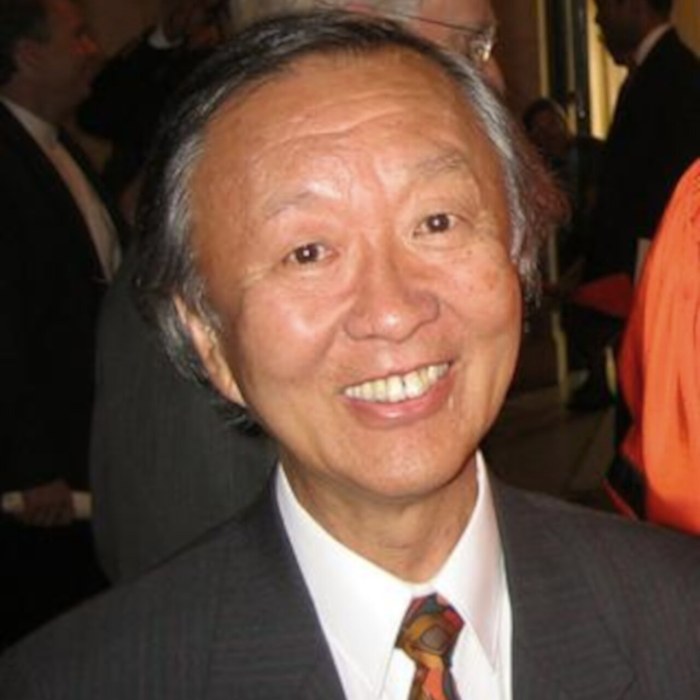
Charles K. Kao
Told that glass could never carry a telephone call, he proved it could and wired the world with light
Charles Kao was born in Shanghai in 1933 and moved with his family to Hong Kong in 1949. He went to London for his A-levels, took an engineering degree at Woolwich Polytechnic, and joined Standard Telecommunication Laboratories in Harlow, where he also worked on a doctorate in the evenings. The laboratory was looking for a way to carry more telephone calls than copper wire allowed.
Glass fibres were known to guide light, but they lost almost all of it within a few metres, and most researchers thought the idea of using them for communication was hopeless. In 1966 Kao and George Hockham published a paper arguing that the loss came from impurities, chiefly iron, and not from glass itself. If the fibre could be made pure enough to lose less than 20 decibels per kilometre, it could carry signals across a city. Nobody knew how to make glass a thousand times purer than the best available.
Kao spent the next years travelling to glass companies, telephone administrations and laboratories in Japan, America and Germany, showing them the sums and asking them to try. In 1970 Corning produced the first fibre that met his figure. By the 1980s the fibres were crossing oceans.
He became vice-chancellor of the Chinese University of Hong Kong. Diagnosed with Alzheimer\'s disease in 2004, he was awarded the Nobel Prize in Physics in 2009 and his wife Gwen accepted it on his behalf. He died in 2018.