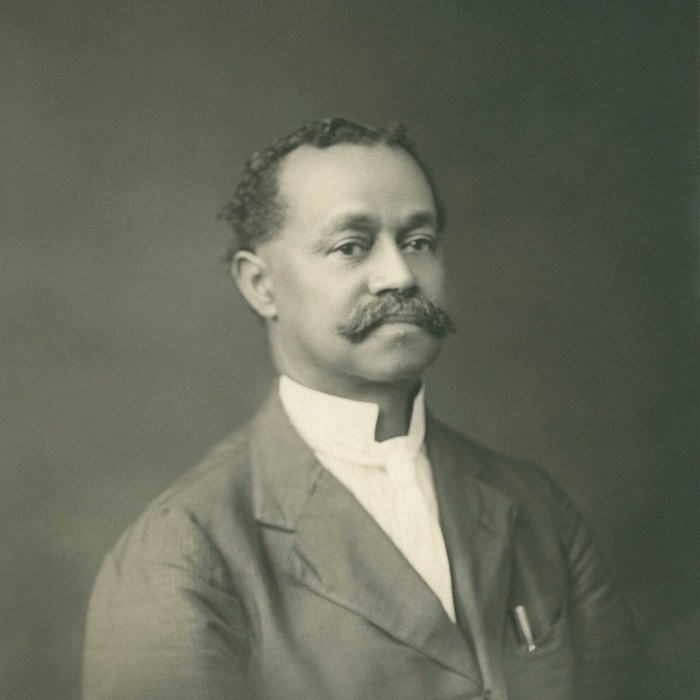
Charles Henry Turner
Taught high school for fourteen years and, in his spare time, proved that insects can learn
Charles Henry Turner was born in Cincinnati in 1867, two years after the end of the Civil War. His father was a church caretaker and his mother a nurse, and the house was full of books. He took a degree and then a master's at the University of Cincinnati, where his study of the structure of bird brains was published in 1891, and in 1907 he became one of the first African Americans to earn a doctorate in zoology from the University of Chicago.
That should have led to a university post. He applied and was turned down. In 1908 he took a job teaching science at Sumner High School in St Louis, a school for Black students, and stayed for the rest of his working life.
What he did with his evenings and holidays is the remarkable part. Working with insects he could collect himself and apparatus he made, he set out to discover whether they simply reacted to stimuli, as the textbooks said, or could learn. He trained honeybees to associate colours and patterns with food. He showed that moths responded to sound, and that cockroaches could learn a maze. He described the way ants circle back towards their nest, a behaviour a French scientist named after him. Around seventy papers came out of this, in the best journals of the day.
He died in 1923, aged 56, worn out by teaching and by illness, and was largely forgotten until biologists began to cite him again decades later.