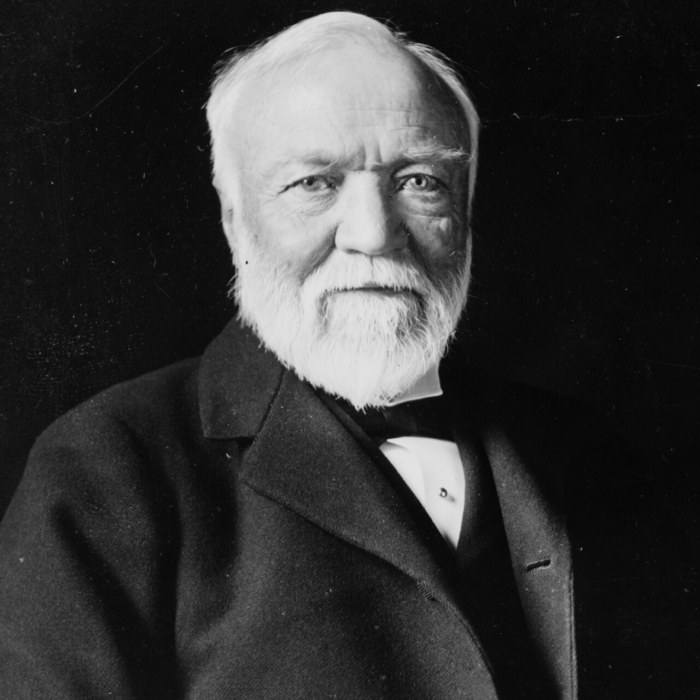
Andrew Carnegie
A bobbin boy on a dollar a week who became the richest man in the world and gave it all away
Andrew Carnegie was born in Dunfermline in 1835, the son of a handloom weaver whose trade was being wiped out by steam-powered mills. In 1848, with the family close to destitution, they borrowed the fare and sailed for America, settling near Pittsburgh. At thirteen Andrew went to work as a bobbin boy in a cotton mill for one dollar twenty cents a week, then as a telegraph messenger, where he taught himself to read the wires by ear.
That skill got him a job as personal telegrapher to Thomas Scott of the Pennsylvania Railroad, who taught him how business worked and helped him make his first investments. By his early thirties he had money in iron, bridges, sleeping cars and oil, and in the 1870s he put everything into steel, building the most efficient mills in the world and cutting prices relentlessly.
The record has a dark chapter. In 1892, at his Homestead works, his partner Henry Clay Frick locked out the union, brought in armed Pinkerton guards, and a gun battle followed in which ten men died. Carnegie, who had written essays defending the rights of labour, was in Scotland and let Frick do it. He later said it was the thing he most regretted.
In 1901 he sold Carnegie Steel to J. P. Morgan for 480 million dollars and set about disposing of the money. He had written in 1889 that a rich man should die poor, and he tried: 2,509 libraries around the world, Carnegie Hall, pensions for teachers, institutes for science and peace, church organs, and Dunfermline's park. By his death in 1919 he had given away roughly ninety per cent of everything he had.