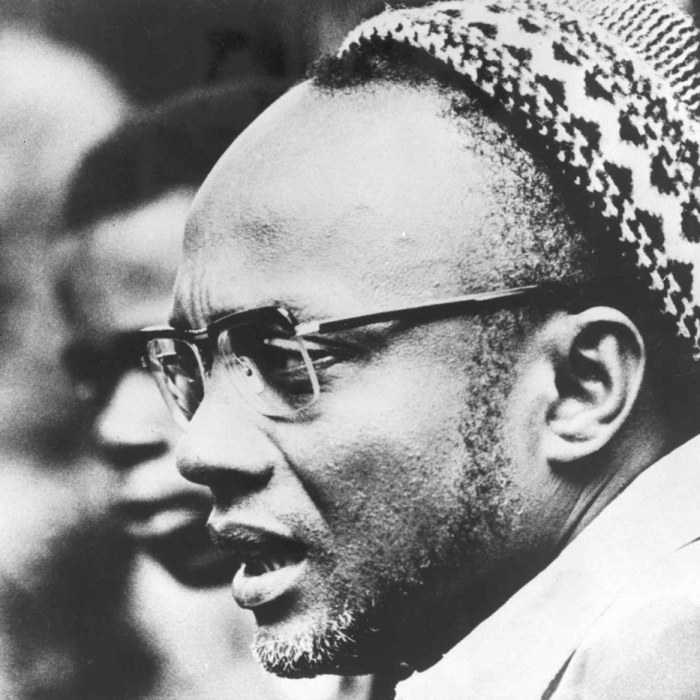
Amílcar Cabral
Agronomist who led Guinea-Bissau and Cape Verde toward independence and was killed before it came
Amilcar Cabral was born in Bafata in Portuguese Guinea to parents from Cape Verde and trained as an agronomist in Lisbon, where he mixed with other African students who would go on to lead independence movements across Portugal's colonies. His agricultural surveys of Guinea took him into villages across the territory and taught him how colonial taxation and forced cotton growing had impoverished the peasantry, knowledge he later used to build a guerrilla movement rooted in the countryside rather than the small colonial towns.
He founded the PAIGC in 1956 and, after peaceful protest was met with a massacre of striking dockworkers in 1959, turned to armed struggle in 1963. Within liberated zones his fighters ran schools, clinics and courts, an approach Cabral saw as inseparable from the war itself; he argued that a movement that only destroyed the old order without building a new one would fail.
By the early 1970s the PAIGC controlled much of the countryside and had unilaterally declared the independent state of Guinea-Bissau, recognised by dozens of governments while Portugal still fought on. Cabral did not live to see it confirmed. In January 1973 he was shot dead outside his home in Conakry by a former comrade in a plot with links to the Portuguese secret police.
Guinea-Bissau became independent later that year and Cape Verde in 1975, both under parties that trace their origin to Cabral's movement.