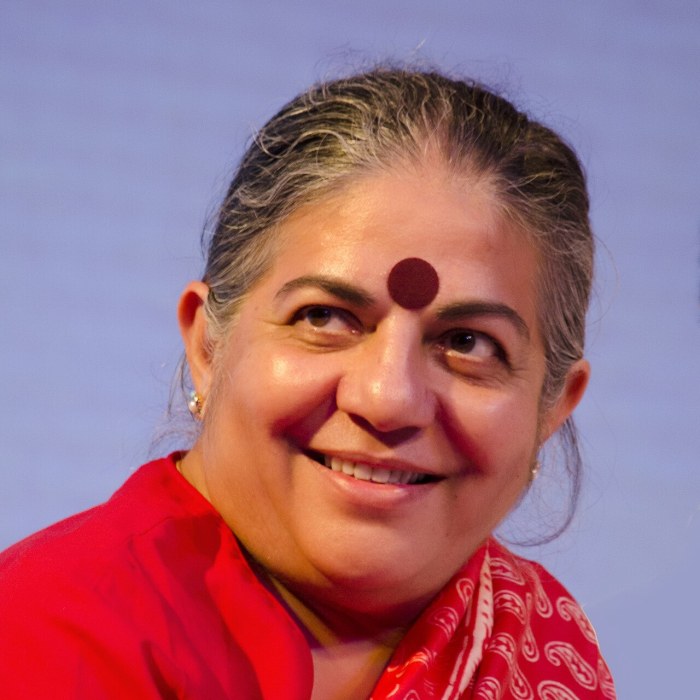
Vandana Shiva
Physicist turned campaigner for seed sovereignty and against corporate control of farming
Vandana Shiva grew up in the Himalayan foothills of Dehradun, the daughter of a forest conservator, and trained as a physicist, earning a doctorate in Canada on the philosophy of quantum theory. Research into the 1970s Chipko movement, in which villagers hugged trees to stop them being felled, drew her back to India and into environmental activism, and she began studying how large dams, monoculture farming and the Green Revolution's chemical-intensive agriculture were affecting rural communities and biodiversity.
In 1991 she founded Navdanya, a movement to conserve traditional seed varieties and support organic farming, in direct opposition to the spread of patented hybrid and genetically modified seeds sold by multinational agribusiness companies. She became one of the world's most prominent critics of corporate control over agriculture, arguing that patenting seeds and requiring farmers to buy new stock each season trapped them in debt, a link she drew to the wave of farmer suicides in India during the 1990s and 2000s, though the causes of those suicides remain debated among researchers.
She has written more than twenty books, won the Right Livelihood Award, and campaigned globally against genetically modified crops, sometimes drawing criticism from scientists who argue she overstates the risks and understates the potential benefits of biotechnology for food security.
She remains an active campaigner and public speaker into her seventies.