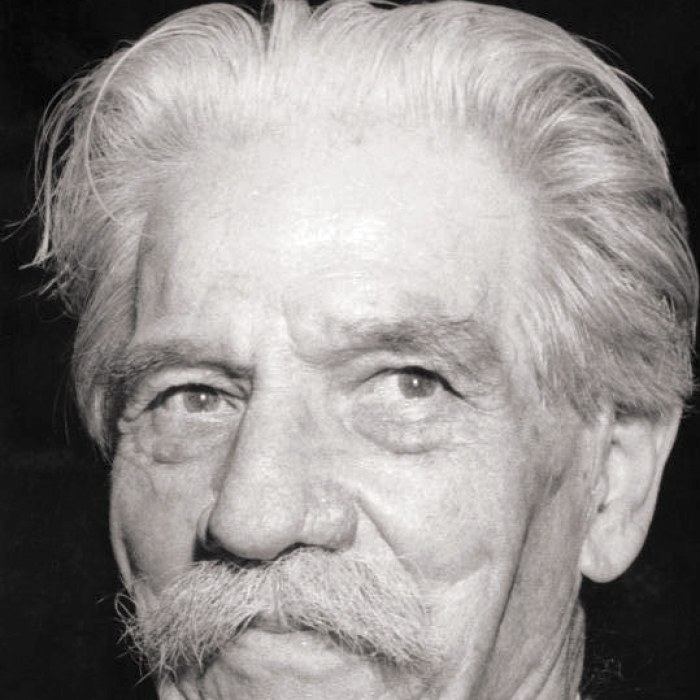
Albert Schweitzer
Gave up a brilliant academic career at 30 to start medicine and build a hospital in the African forest
Albert Schweitzer was born in Alsace, then part of Germany, the son of a Lutheran pastor. By thirty he was a professor of theology in Strasbourg, the author of a celebrated book on the historical Jesus, and one of the leading organists of his day. He had decided years earlier that he would allow himself to pursue science and art until thirty, and then devote himself to serving others directly.
An article from a missionary society asking for a doctor in the Congo basin gave him his target. To the dismay of his family and colleagues he enrolled as a medical student, funding his studies with organ recitals and writing. In 1913 he and his wife Hélène, a nurse, sailed for Lambaréné in Gabon, where he set up a hospital in a converted henhouse.
The First World War broke in. As German citizens in a French colony they were interned, and shipped to camps in France. He returned alone in 1924 to find the hospital rotted away, and built it again. It grew into a village of huts where patients' families cooked and stayed, treating leprosy, sleeping sickness and injuries for tens of thousands of people over the decades.
He won the Nobel Peace Prize in 1952 and used his fame to campaign against nuclear weapons testing. Visitors in the 1950s and 1960s were often shocked by the hospital's conditions and by his remarks about Africans, which reflected the outlook of a colonial era he had never left behind. He died at Lambaréné in 1965 and is buried there.