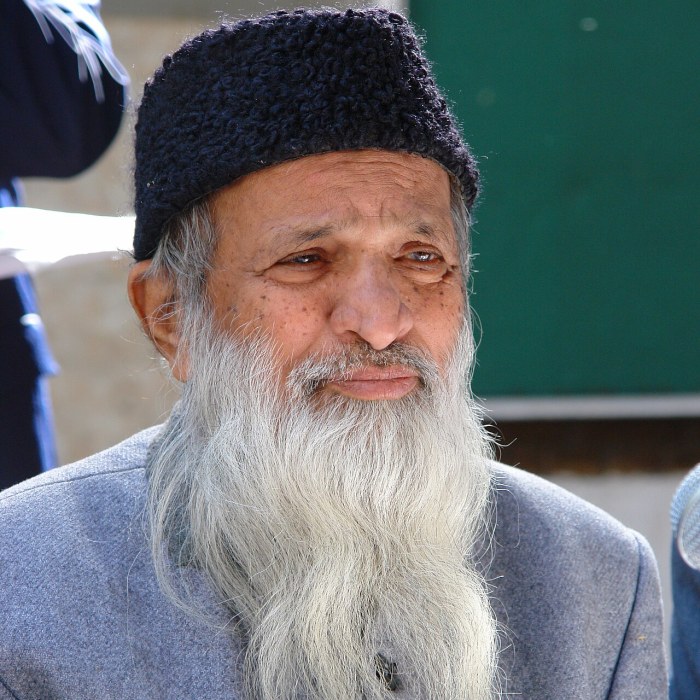
Abdul Sattar Edhi
Owned two sets of clothes and ran the world's largest volunteer ambulance service
Abdul Sattar Edhi was born in a small town in Gujarat, India. When he was eleven his mother was paralysed by a stroke, and he spent his teenage years feeding, washing and caring for her until she died. The experience of watching a helpless person and finding no help for her shaped everything afterwards. In 1947 the family moved to the new state of Pakistan and settled in Karachi, where he sold cloth and pencils in the streets.
In 1951 he used his savings to open a tiny dispensary in a poor quarter, and slept on a bench outside so people could find him at night. A flu epidemic led to a tent clinic; donations bought an old van that he drove himself as an ambulance. From that grew the Edhi Foundation, which by the end of his life ran some 1,800 ambulances across Pakistan, together with orphanages, homes for the mentally ill and the elderly, women's shelters, a morgue and a helpline. Its vans go to bomb sites, floods and gunfights before the state does, and its workers wash and bury bodies nobody claims.
Outside Edhi centres stand cradles where a mother may leave a baby without being asked questions; tens of thousands have been raised by the foundation. Edhi took no salary, owned two sets of clothes, lived in a room beside the office and refused government money in case it came with conditions. His wife Bilquis, a nurse, ran the women's and children's work.
He died in 2016 after years of kidney failure, having donated his corneas, and was given a state funeral.