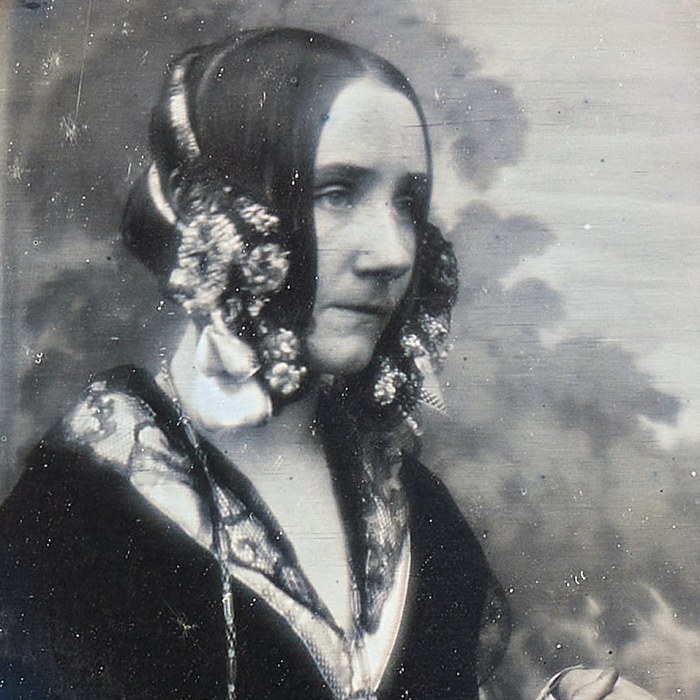
Ada Lovelace
Wrote the first published computer program a century before there was a computer to run it
Ada was the only legitimate child of the poet Lord Byron, who left England when she was a few months old and never saw her again. Her mother, afraid that Ada had inherited his instability, had her drilled in mathematics from childhood as a kind of discipline. At 13 she caught measles and was left partly paralysed; she spent nearly a year in bed and walked on crutches for a time afterwards.
At 17 she was taken to a London party and met Charles Babbage, who showed her a working section of his Difference Engine. Most guests saw a curiosity. She saw the beginning of something and pestered Babbage for details for the rest of his life. She married, had three children and kept studying, taking lessons by letter from the mathematician Augustus De Morgan, who thought her ability exceptional.
In 1843 she translated an Italian paper describing Babbage's proposed Analytical Engine and added notes of her own that ran to three times the length of the original. In them she set out step by step how the machine could compute a sequence of Bernoulli numbers, the first published algorithm intended for a machine. She also argued, against Babbage, that such an engine need not be limited to numbers and might one day compose music.
She struggled with illness, laudanum and gambling debts, and died of cancer at 36. She asked to be buried beside the father she never knew.