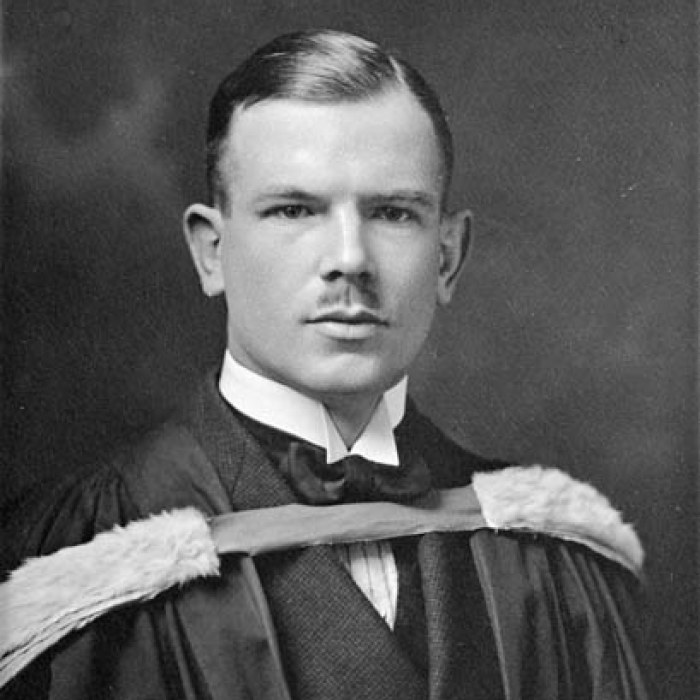
Norman Bethune
Took blood transfusion to the front lines of Spain and died operating for the Chinese Eighth Route Army
Norman Bethune was a Presbyterian minister's son from Ontario, restless from the start: he worked as a lumberjack and a teacher in a logging camp before finishing medicine, was wounded as a stretcher bearer in the First World War, and married and divorced the same woman twice. In 1926 he contracted tuberculosis and, reading about a risky treatment that collapsed the infected lung, insisted on having it done to himself. It worked, and he became a thoracic surgeon of some fame in Montreal, designing instruments that bore his name.
Watching patients in the Depression who could not afford treatment turned him towards socialised medicine, and in 1935 he joined the Communist Party of Canada. In 1936 he went to Spain to support the Republic and organised a mobile blood transfusion service, one of the first, that carried refrigerated blood to the front in a van instead of waiting for the wounded to reach hospital. He was also drinking heavily and fell out with his colleagues, and was sent home in 1937.
In 1938 he went to China, where the Communists were fighting the Japanese invasion, and attached himself to the Eighth Route Army in the mountains of the north. He operated in temples and peasant houses, sometimes for days without rest, trained medics and wrote textbooks for them, and refused to keep himself safer than the soldiers.
In October 1939 he cut his finger during an operation and the wound turned septic. Without antibiotics he died within weeks. Mao Zedong's essay on his death made him a household name in China.