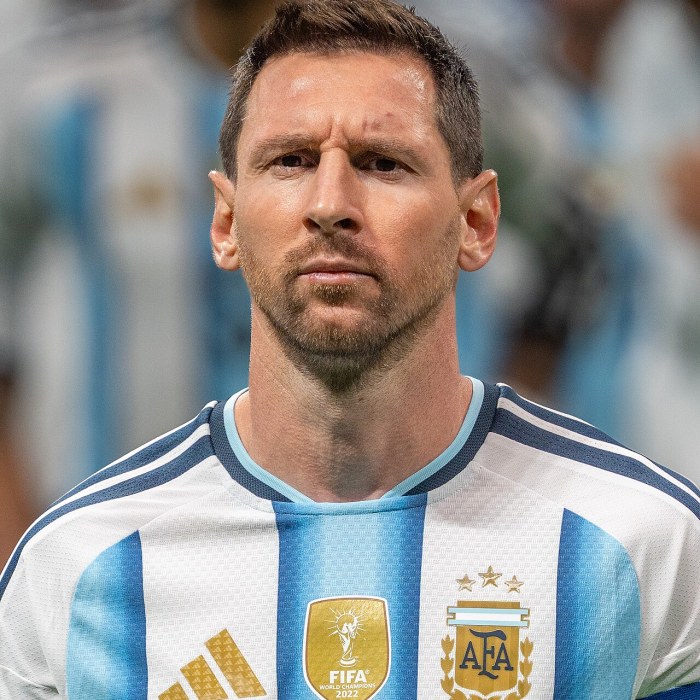
Lionel Messi
A boy whose body stopped growing, signed on a paper napkin, who won the World Cup at 35
Lionel Messi grew up in Rosario, Argentina, the son of a steelworker, and was the smallest boy in every team he played for. At about ten he was diagnosed with a growth hormone deficiency. The treatment involved injecting himself in the leg every night and cost hundreds of dollars a month, more than his family could sustain, and the Argentine clubs interested in him would not take on the bill.
In 2000, when he was 13, Barcelona's sporting director watched him in a trial and was so anxious not to lose him that he wrote out the terms of an agreement on a paper napkin at a restaurant. The club paid for his treatment. The family moved to Spain, his mother and siblings soon went home, and Messi spent his early teens in a foreign city, homesick and quiet, with his father.
He became the greatest player in the club's history, winning the Champions League four times and the Ballon d'Or a record eight times. But for years he was accused at home of caring only for Barcelona. Argentina lost four major finals with him, including the 2014 World Cup, and in 2016 he briefly retired from international football.
He came back. In 2021 Argentina won the Copa América, its first title in 28 years, and in 2022, at 35, he scored twice in the World Cup final in Qatar as his country won on penalties. He now plays for Inter Miami in the United States.