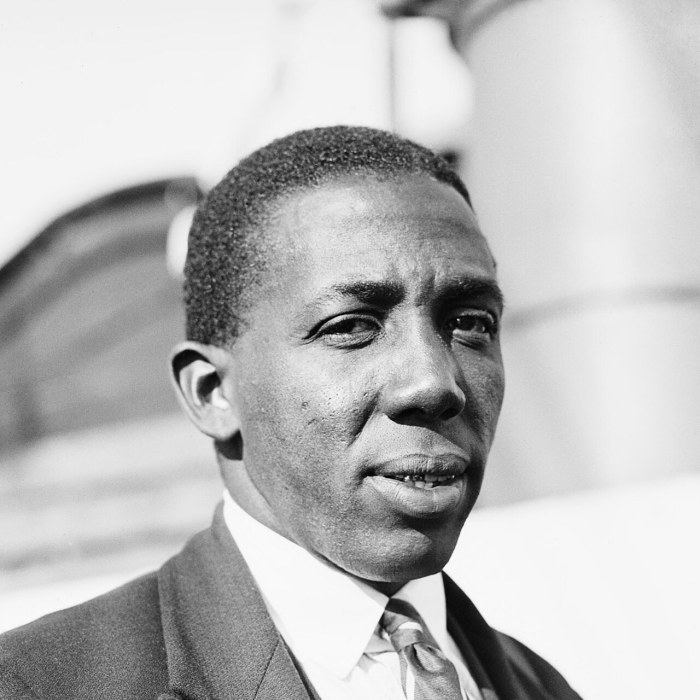
Learie Constantine
A West Indian cricketer who took a London hotel to court for racism and became Britain's first Black peer
Learie Constantine was born in Trinidad, the son of a cocoa plantation foreman who had toured England with the West Indies, and the grandson of people who had been enslaved. He was a fast bowler, big hitter and astonishing fielder, and toured England in 1928 with the first West Indies Test side. Cricket in the Caribbean was run by white men, and there was no living to be made from it for a Black player.
So in 1929 he took a job as the professional at Nelson, a mill town in the Lancashire League. He and his wife were the only Black family in the town, and stared at in the street. He stayed nine years, led the club to league title after league title, and was loved there. He studied law in the evenings. During the war he worked for the Ministry of Labour, helping West Indian workers in Liverpool factories.
In 1943 he booked rooms at the Imperial Hotel in London for his family, who were then told they could not stay because American guests objected. He sued. The judge found in his favour, and the case became a landmark in the slow progress towards British race relations law. His 1954 book, Colour Bar, set out what Black people in Britain faced.
He was called to the bar at 53, became a minister in Trinidad's first government, served as its High Commissioner in London, and in 1969 became Baron Constantine of Maraval and Nelson, the first Black member of the House of Lords.