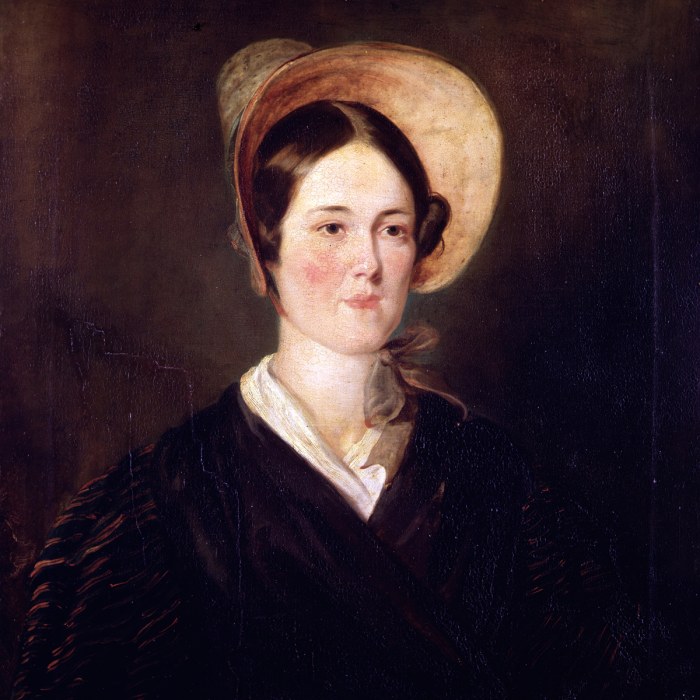
Grace Darling
Rowed out with her father into a storm at 22, saved nine people and hated the fame that followed
Grace Darling was born in 1815 at Bamburgh on the Northumberland coast, the seventh of nine children of William Darling, keeper of the Longstone Lighthouse on the outer Farne Islands. She grew up on the rock, taught by her parents, rowing and helping with the lamp, and by her twenties was the only daughter still at home.
Early on 7 September 1838, in a gale, she looked out from an upstairs window and saw the wreck of the paddle steamer Forfarshire on Big Harcar rock, about a mile away. The sea was too rough for the lifeboat at Seahouses to reach them, and the Darlings judged that with only two of them to row it would be hard to return against the storm. They went anyway, taking the long way round in the lee of the islands. Grace held the coble steady on the oars while her father got the survivors off: a woman whose two children had died in the night, an injured man and three others. Her father and two of the rescued crew then went back for four more. Nine people were saved.
The story reached the newspapers and she became the first celebrity of the Victorian age. Queen Victoria sent fifty pounds, the Royal Humane Society and the lifeboat institution gave medals, and artists arrived by boat to paint her. She found it exhausting and bewildering, and refused offers to appear in theatres.
She died of tuberculosis in 1842, aged twenty-six.