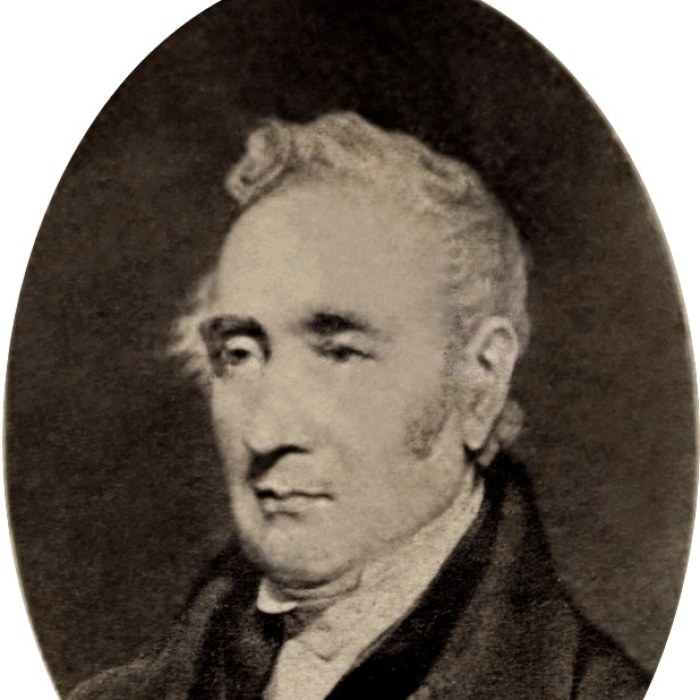
George Stephenson
Could not read until he was 18 and went on to build the first passenger railways
George Stephenson was born in a one-room cottage at Wylam in Northumberland, beside a wagonway on which horses pulled coal. His father stoked the fire of a colliery pumping engine and the family had no money for school. George herded cows, then went to work at the pit, and at 18 he was earning enough to pay for lessons in reading and arithmetic three nights a week.
He became a brakesman and then an engine-wright, taking engines apart to see how they worked. In 1814 he built his first locomotive, Blucher, for the Killingworth colliery. Around the same time he designed a safety lamp for miners, and found himself in a bitter row with the chemist Humphry Davy, who had produced a similar lamp and could not believe an uneducated pitman had done the same.
In 1825 the Stockton and Darlington Railway opened with his engine Locomotion pulling the train, the first public railway to use steam. The Liverpool and Manchester line, which followed in 1830, was a far bigger test. He had to carry the track across Chat Moss, a bog that swallowed everything dropped into it, and he did it by floating the line on layers of brushwood and heather. At the Rainhill Trials in 1829 Rocket, built with his son Robert, beat every rival.
His widowed years and rough manners made him difficult, but the gauge he chose, four feet eight and a half inches, is still the standard on most of the railways in the world.