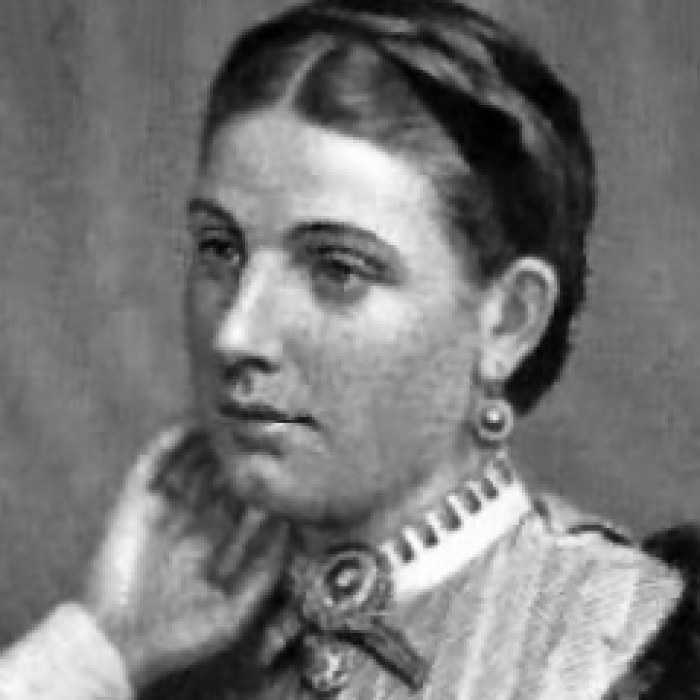
Florence Baker
Rescued from a slave auction as a teenager, she became the first European woman to see Lake Albert
Florence Baker was born Barbara Maria Szász in the Transylvanian region of the Kingdom of Hungary. When she was around seven her parents and brother were killed during unrest linked to the Hungarian revolution, leaving her orphaned. She spent years in refugee camps before being taken toward the Ottoman city of Vidin, where as a young teenager she was put up for sale at a slave auction, reportedly destined for a harem.
There the British explorer Samuel Baker, travelling in the region, saw her at the auction and, after being outbid, arranged privately to have her freed. She chose to travel with him rather than be returned to a settled life, and the two became partners in every sense, though it would be years before they were able to marry, since Baker's first wife had died only shortly before.
From 1861 she accompanied him on an extraordinarily difficult expedition into East and Central Africa, initially searching for the source of the Nile, through territory racked by disease, hostile local politics tied to the slave trade, and near-starvation. Florence already spoke several languages when they met and quickly added Arabic, work that Samuel Baker openly credited with keeping the expedition functioning. In 1864 they became the first Europeans recorded to see Lake Albert, though the credit in most contemporary British accounts went overwhelmingly to Samuel, who was knighted; Florence, as a woman with an unconventional past, was for years excluded from polite society despite having endured the same expedition.
She outlived her husband by over two decades, dying in England in 1916, her own role in one of the era's most difficult expeditions only properly recognised long after her death.