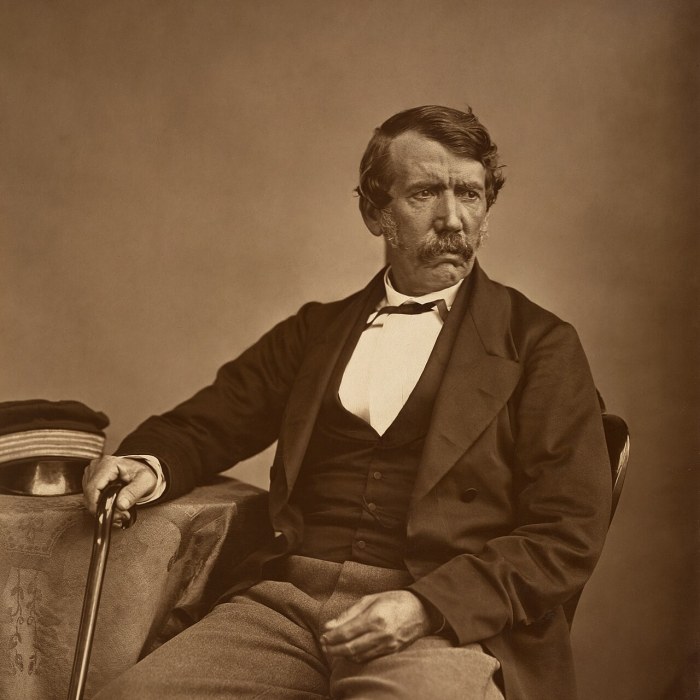
David Livingstone
A mill worker turned missionary whose maps of Africa served both abolition and empire
David Livingstone began working in a Scottish cotton mill at ten years old, attending night school to learn Latin and eventually saving enough to train as a doctor. He went to southern Africa as a missionary in 1841, but found he converted almost no one and instead threw himself into exploration, believing that mapping trade routes and rivers would open the continent's interior to legitimate commerce and undercut the slave trade he had come to hate after witnessing its effects firsthand.
Over three decades he crossed the African continent, becoming the first European to see the waterfall he named Victoria Falls, and travelled thousands of miles largely alone or with a small group of African companions after most European colleagues turned back or died. He was a poor manager of expeditions, and several ended in disaster or the deaths of those under his command, but his written accounts of the slave trade's brutality reached British audiences and helped fuel the movement against it.
He disappeared into central Africa for years searching for the source of the Nile, and when the journalist Henry Morton Stanley found him near Lake Tanganyika in 1871, gaunt and ill, their meeting became one of the most famous encounters in exploration. Livingstone refused to leave Africa and died in 1873 in what is now Zambia. His companions Chuma and Susi removed his heart, buried it there, and carried his preserved body a thousand miles to the coast for return to Britain.