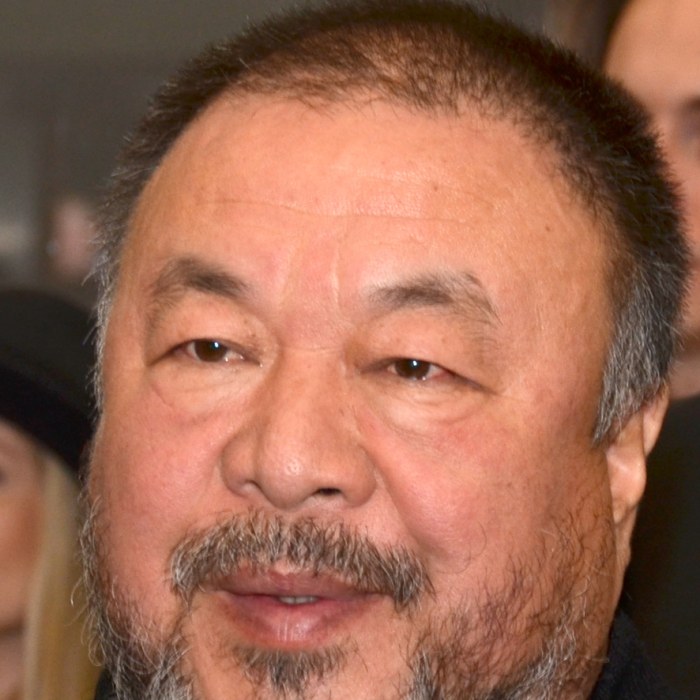
Ai Weiwei
Grew up in exile watching his poet father clean toilets, and has spent his life refusing to be quiet
Ai Weiwei was a baby when his father, Ai Qing, one of the best-known poets in China, was denounced as a rightist in 1958 and the family was sent to the far west. They spent years in Xinjiang, part of it in a dugout, while the poet was made to clean public latrines. The son later said he had learned everything about power from watching his father scrub toilets.
They returned to Beijing in 1976 after Mao\'s death. Ai studied animation, joined an early dissident art group and in 1981 went to New York, where he lived for twelve years doing odd jobs, playing blackjack and photographing everything. He came home in 1993 when his father fell ill and became a fixture of the new Chinese art scene, building his own studio and advising the Swiss architects who designed the Beijing Olympic stadium, then denouncing the Games as propaganda.
After the 2008 Sichuan earthquake he organised volunteers to collect the names of more than five thousand children killed in badly built schools, which the authorities had refused to release. In 2009 police beat him in a hotel room in Chengdu; a month later he had emergency brain surgery in Munich. His Shanghai studio was demolished in 2011, and that April he was seized at the airport and held for 81 days without charge.
His passport was returned in 2015. He has lived since in Berlin, Cambridge and Portugal, making work about refugees, surveillance and the state he still calls home.