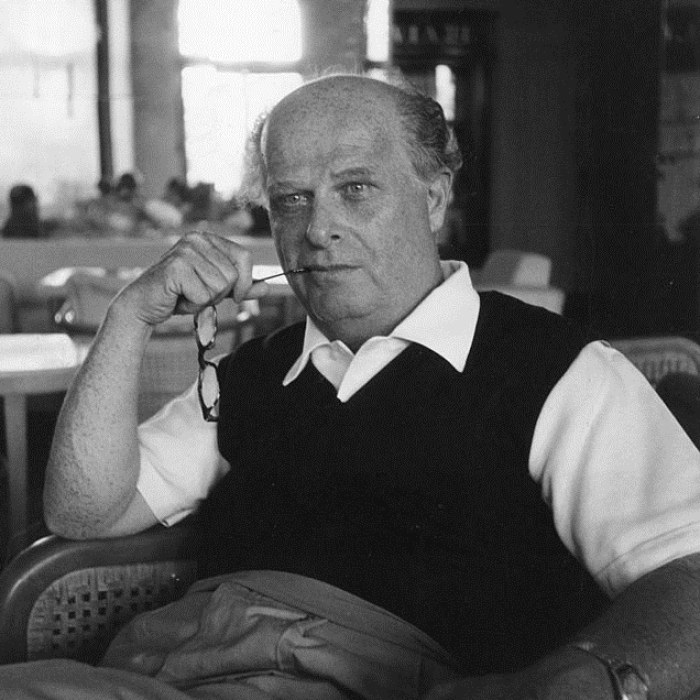
Adriano Olivetti
Built model housing, libraries and clinics for his typewriter workers in a small Italian town
Adriano Olivetti was born in 1901 in Ivrea, a small town in northern Italy, where his father Camillo had founded a company making typewriters, then a novel and uncertain product in Italy. As a young man Adriano worked on the factory floor himself, including a period doing manual assembly line work, before travelling to the United States in the 1920s to study modern manufacturing methods that he found both impressive and, in their treatment of workers, troubling.
He took over leadership of the company in the 1930s and pursued two aims at once: building typewriters and calculating machines admired worldwide for their sleek, modern design, and building a workplace that treated employees as more than interchangeable labour. In Ivrea he funded worker housing, a company library, nurseries, healthcare services, and cultural and social programmes, arguing that a business had an obligation to the community that sustained it, not only to its shareholders.
Under his direction Olivetti became internationally celebrated for industrial design, most famously the bright red Valentine typewriter, and briefly built one of the world's first personal computers, the Programma 101, in the early 1960s, shortly after his death. He also entered Italian politics, founded a political movement, and wrote extensively about what he called a more humane form of capitalism rooted in community and culture rather than pure profit.
He died suddenly of a cerebral haemorrhage on a train in 1960, and the utopian, worker-centred vision of Ivrea he had built gradually faded as the company was later absorbed into other conglomerates, but the town's Olivetti buildings remain a recognised example of socially minded industrial architecture.